
We have few archaeological sources and findings regarding the earliest period of Korean history. However, it can be stated that man made his first appearance in Korea probably around 600,000 years ago. Korean Paleolithic man he was a hunter and gatherer who lived as a nomad in groups or bands. It found refuge in caves and temporary shelters near water, an indispensable source for survival. It was in the caves that various tools such as axes, tips and scrapers were found, along with fossilized animal bones.
More numerous archaeological finds date back to the late Paleolithic, as a truly more refined "industry" was discovered, which includes blades, micro blades and the first throwing points. No less important are the stones, used in hunting, similar to today's South American "bolas".
While little or nothing is known about the Mesolithic and scholars are still debating whether this period actually existed in Korea, on the neolithic there are several archaeological finds.
Thanks to the large quantity of obsidian objects found, we can understand that stone processing has become more sophisticated and mature. But the most characteristic product of the Neolithic is undoubtedly ceramics with "comb" decoration, i pissalmunui togi. These are mostly vases with a wide mouth and a pointed bottom, decorated with engravings in parallel oblique lines, presumably used to preserve food. The findings of vases, fishing hooks, awls, harpoons and arrowheads, inside or near the Neolithic villages, composed of circular-shaped basement huts, lead us to assume the existence of relationships with Japan, given the similarity with their artefacts (see ceramics "Jomon” of northern Kyushu).
In the late Neolithic, there probably also began to be contacts with north-eastern China and Manchuria, proven by the fact that there is new pottery, different from the usual "comb-shaped" one. A rougher style, which even seems to go back compared to the techniques that had been refined over time. Precisely in this late Neolithic period, different cultural aspects can be seen between North and South Korea.
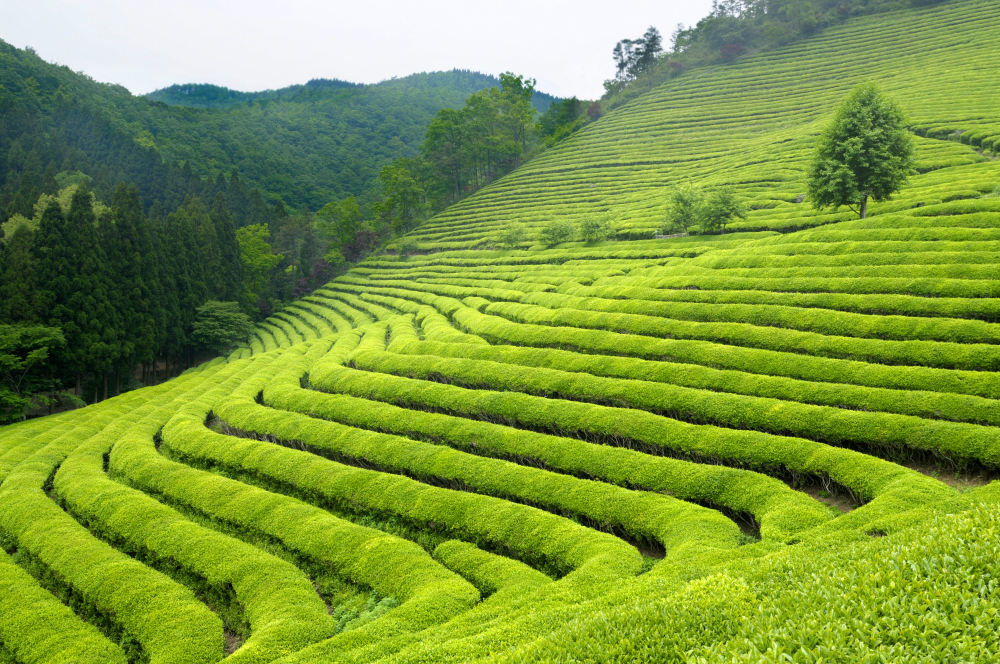
From the middle of the 1st millennium BC. the period of the great turning point began thanks above all to the spread of agriculture, which allowed the population to transform from nomadic to peasant. In the same period, exchanges with neighboring peoples intensified, making it possible to discover new products, among the most important were rice, which was most likely imported from China, and tea.
In the same period the knowledge of metals began (metal age: bronze and iron). The Korean peoples approach directly from bronze, without going through the intermediate phases of copper and tin processing.
Furthermore, the burials tell us that it was customary to use megalithic funerary monuments such as Dolmen: Korea is defined as "the kingdom of Dolmens" because, together with North Korea, it has approximately 40% of all the Dolmens known in the world (Gochang, Hwasun and Ganghwa are a grouping of around a hundred Dolmens, declared a UNESCO heritage site).
In the period called gods Three Kingdoms The Korean Peninsula is divided into three territories: Koguryŏ, was the first to arise, but it is difficult to identify a date when it became a real state, Paekche e Silla.
The largest, that of Koguryŏ, at its maximum expansion, came to occupy the entire central/northern part of Korea, up to a part of present-day Manchuria.
In the southern part, however, we find the small states of Paekche to the west and Silla to the east.
Despite the kingdom's long initial dominance Koguryŏ, the kingdom of Silla, thanks to the formidable strength of the military elite class of the Hwarang and the alliance with China, in 668 AD. unified the korean peninsula for the first time in its history by bringing down the kingdom of Koguryŏ and Paekche.
We can find archaeological finds from this period for example in Ji'an (UNESCO heritage) or at the Hwangnyongsa temple (UNESCO heritage) in Gyeongju
The fall of the two kingdoms began the unified Silla period (668 – 935), defined as "a state that did not know how to become a nation".
Once the feat of unifying the territory was accomplished, around half of the people living on the Korean peninsula, all the related problems of a social and administrative nature arose.
For the first time, the country needed power to be centralized in the hands of a single sovereign, who could govern the entire territory. A problem that Korea had never faced before. Furthermore, in addition to internal problems, there was the threat of the Tang Chinese, who had helped the Silla in their heroic undertaking, not without their own purpose. In fact, they wanted to have an influential power on the Korean peninsula. In fact, in this period, the Tang settled in the ancient territories of Paekche and Koguryŏ.
Another element of instability in the country, in addition to those already present, was in the religious sphere, due to the conflict between Buddhism and Confucianism.
All these problems soon led to rebellions and civil wars led by Gung Ye, which he founded Taebong, And Gyeon Hwon which he founded Baekje. These two new kingdoms Along with Silla now in decline, are known as the Later Three Kingdoms. Of course, when power is at stake, the fights don't stop until someone manages to overpower the others: Wang Geon (also known by the names of Goryeo Taejo o Taejo Wang Geon) obtained the keys to the kingdom.
In the Koryŏ period, the Korean Middle Ages (935 – 1392), the king Wang Kon Taejo, despite the various difficulties, given by the continuous internal struggles, manages to consolidate its power thanks to alliances with various families through arranged marriages, managing to create an important chain of mutual solidarity and loyalty to the throne.
He then laid the foundations of a national unification, called the "Three Later Kingdoms of Korea". A very important union because it involved not only half of the peninsula as in the Unified Silla period, but the entire peninsular population remaining united thus, despite the succession of dynasties and the Japanese occupation, until 1948 (the year in which it was divided between north and south during the Cold War). The name of this wonderful nation comes from the term "Goryeo", which in turn was derived from "Goguryeo," which Wang Kon Taejo and his unified kingdom inherited.
After his death, a very important figure is that of King Kwangjong, a diplomatic person and, if necessary, even ruthless. This is defined as Korea's golden period, with good internal tranquility and sufficient security beyond the borders; despite threats from the Khitan and Jurchen, Manchuria and later the Mongols.
From this era we can observe various works, among the most important are the celadon ceramics (visible at the National Museum of Korea and at the Leeum, Samsung Museum of Art, both in Seoul), the Tripitaka Koreana preserved in the Haein temple and the Jikji, a type book printed in 1377 (two centuries before Gutenberg).
The fall of the Goryeo dynasty was the work of Yi Seong-gye, general of the army who during an expedition to invade Liaoning, put the king and his heirs to death, usurping the throne and founding Choson.
Thus begins the Period Choson, the "Korean Renaissance" (1392 – 1910), an era in which Confucian thought predominately dominates, which re-evaluates the role of man in a universe that can be improved through the study and development of science and literature. There was the need to start from scratch, delegitimizing the past due to a cultural identity trampled upon by the Mongols and the mistakes of previous royal families.
A total revolution, therefore, aimed at taking away any right to reign from the Wang house of Koryŏ, due to their corruption, wickedness and behavior deemed unsuitable for the good of the country.
Power then passes from the Wangs to the Yi family, moving the capital from Kaesong (Hanyang) to Paekche.
The period Choson is remembered above all thanks to King Sejong, called Sejong the Great, the ruler most loved and respected by Koreans as well as the one best known by Westerners.
In the military field, he entrusts his commander with the task of attacking the bases in Tsushima, a Japanese island, to resolve the age-old problem of the Japanese invasion. Subsequently, he managed to consolidate the northern borders of the country, to protect himself from the populations of Manchuria (Mongols, Jurchen and various anarchist populations, defined by the Koreans as "Yain", i.e. barbarians).
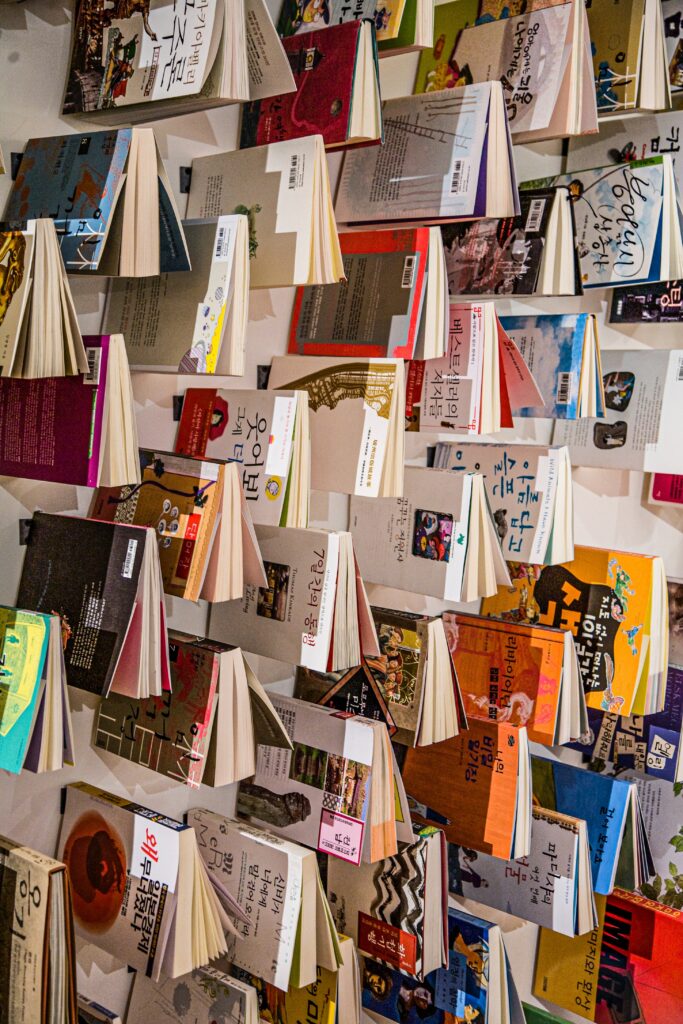
But the immortal fame of King Sejong is certainly due to the invention of the national alphabet, invented in 1443 and promulgated in 1446, theHangul. (To find out more you can read our article: The birth of hangul.)
The art of this period is mainly concentrated around painting and calligraphy. However, we must not neglect ceramics and other forms of very high craftsmanship, such as inlaid furniture and vases.
This era of relative internal peace and splendor was destined to end on August 22, 1910, the day on which the treaty of annexation of Korea to Japan was signed. Thus began the hardest and most tragic years for the inhabitants of the Korean peninsula who, under Japanese occupation, would slowly lose the independence they had laboriously built and maintained over the centuries.
Massimo Gaz
Credit: cover image by Freepik