
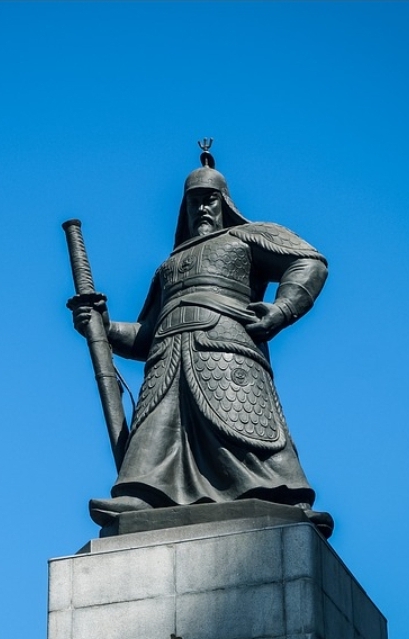
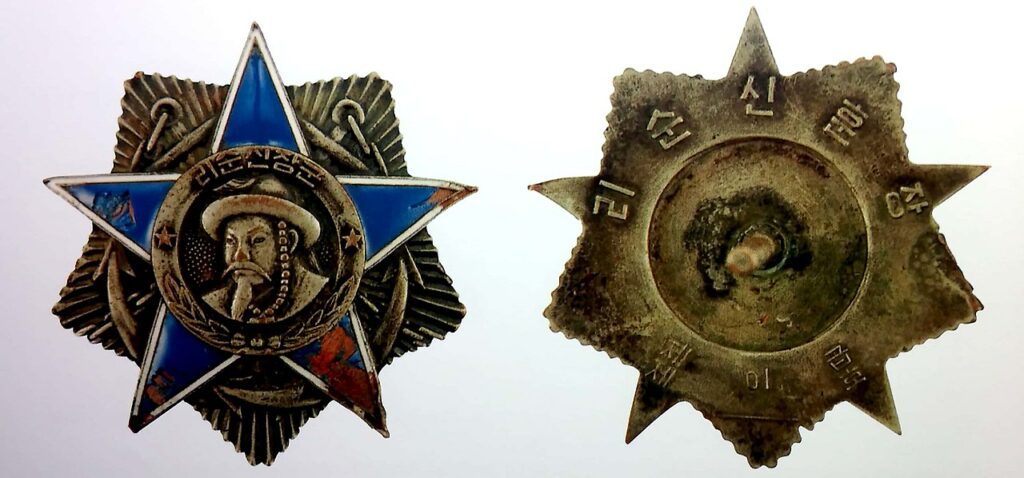
Admiral Yi Sun-sin is one of the most venerable figures in Korean history, known for his incredible military genius and indomitable patriotism. Born in 1545 in Hansong (now Seoul), Yi Sun-sin dedicated his life to defending Korea against Japanese invasions during the Imjin War (1592-1598). Despite facing numerous difficulties, including a lack of resources and betrayal by some colleagues, Yi managed to achieve extraordinary victories thanks to his strategic intelligence and courage.
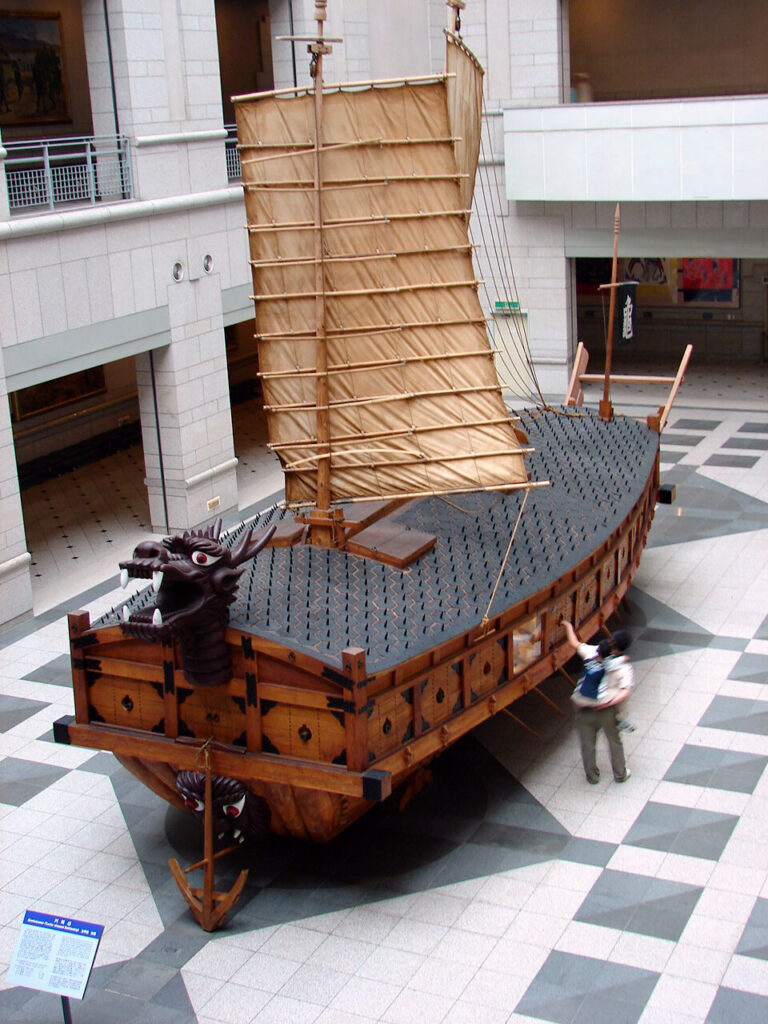
One of Yi Sun-sin's most celebrated contributions to naval history is the invention of the "turtle ship", or geobukseon. These ironclads, with their innovative design and offensive capabilities, played a crucial role in repelling the Japanese fleets.
Turtle ships were characterized by an armored covering that resembled the shell of a turtle, hence their name. This cover protected the crew from enemy shells and attacks, allowing them to safely approach opposing ships. Additionally, turtle ships were equipped with cannons and fire lances, making them extremely effective in both attack and defense.
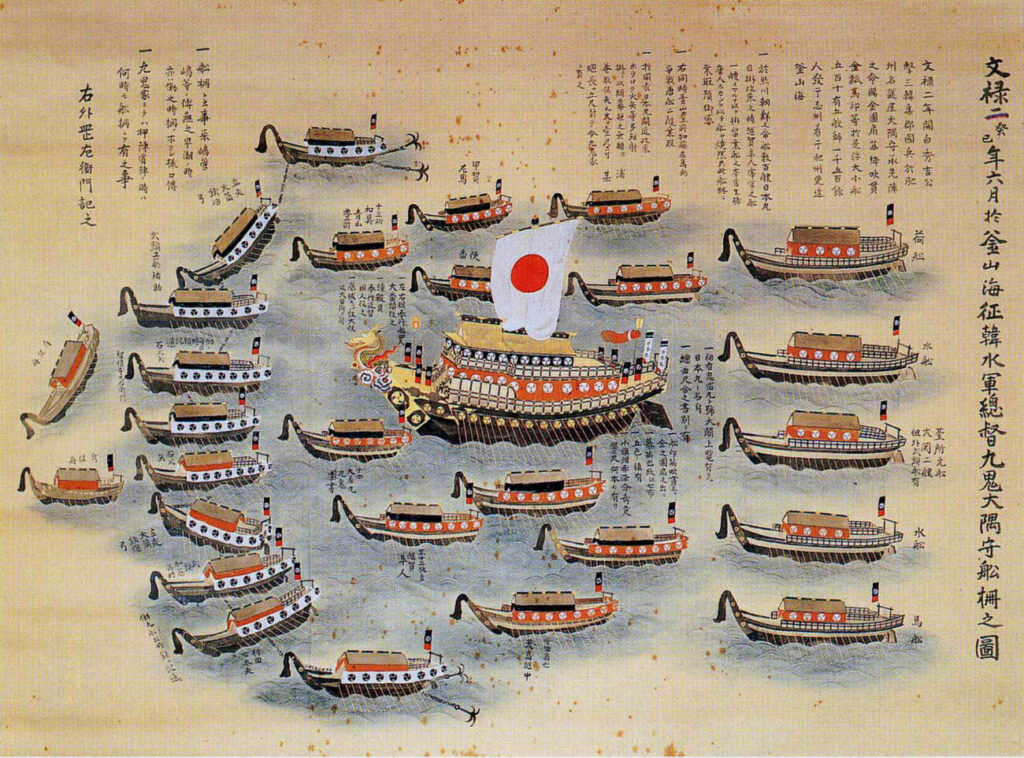
"The Battle of Myeongnyang, fought in 1597, is one of the most emblematic examples of Yi's tactical genius: with only 13 ships, the admiral managed to defeat a Japanese fleet of over 300 ships, once again demonstrating his skill in command and strategic planning. In addition to cannons, the Korean soldiers used "protuberances" on the turtle ships in the shape of iron "wings" to cut off and destroy the hulls of enemy ships. Admiral Yi also exploited a narrow passage between the two seas, waiting for the Japanese ships in front of a gigantic whirlpool, the result was a winner for the Koreans, because many Japanese ships ended up in it, decimating the fleet."
Another of his winning strategies was first to cut off the land support supplies for the Japanese ships, and consequently, while the Japanese soldiers were exhausted and suffering from hunger, Yi Sun Sin decided to throw some flour into the sea, simulating the whitish color of rice when it is washed, with the aim of making the Japanese believe they had plenty of rice and food to continue the battle for a long time. Seeing the whitish color approaching their ships at sea and believing that the Koreans could sustain themselves for a long time, the Japanese retreated defeated, even mentally, from the battle.
Admiral Yi Sun-sin and his turtle ships play a crucial role in Korean and world naval history. His innovative tactics and courage changed the course of sea battles, significantly contributing to the protection of Korea against Japanese invasions.
Even today, Yi Sun-sin is celebrated as a national hero in South Korea, and his exploits are still reported in Korean schoolbooks and naval school textbooks, and studied by historians and military history buffs around the world.
His death on December 16, 1598 during the Battle of Noryang represents a crucial and tragic moment in Korean history. Despite already being seriously wounded, Yi Sun-sin continued to command his troops until his last breath, demonstrating an unwavering commitment to his country.
According to historical records, Admiral Yi was hit by an enemy shell during the battle. Even at the point of death, his main concern was the morale and victory of his troops. His last words, "Is the battle at an end? Strike the drum and advance the troops. Do not herald my death," reflect his stainless sense of duty. His death was kept secret until the battle's conclusion, allowing Korean forces to achieve a decisive victory.
The legend of Yi Sun-sin continues to live in the hearts and minds of the Korean people. He is not only remembered for his military prowess, but also for his principles of ethical leadership and his unrelenting commitment to the defense of the homeland. His life and exploits are celebrated through numerous monuments, films and books, making him an immortal figure in Korean history and an example of heroism and dedication. His military career was marked by numerous victories against much larger enemy fleets, thus earning him the respect and admiration of both his contemporaries and subsequent generations.
P
PAOLA PELISSA