
Korean temples, known for their beauty and spirituality, are home to a wide range of drawings and statues representing Buddhist deities and religious figures. These works of art not only decorate temples but also serve as tools for meditation and worship.
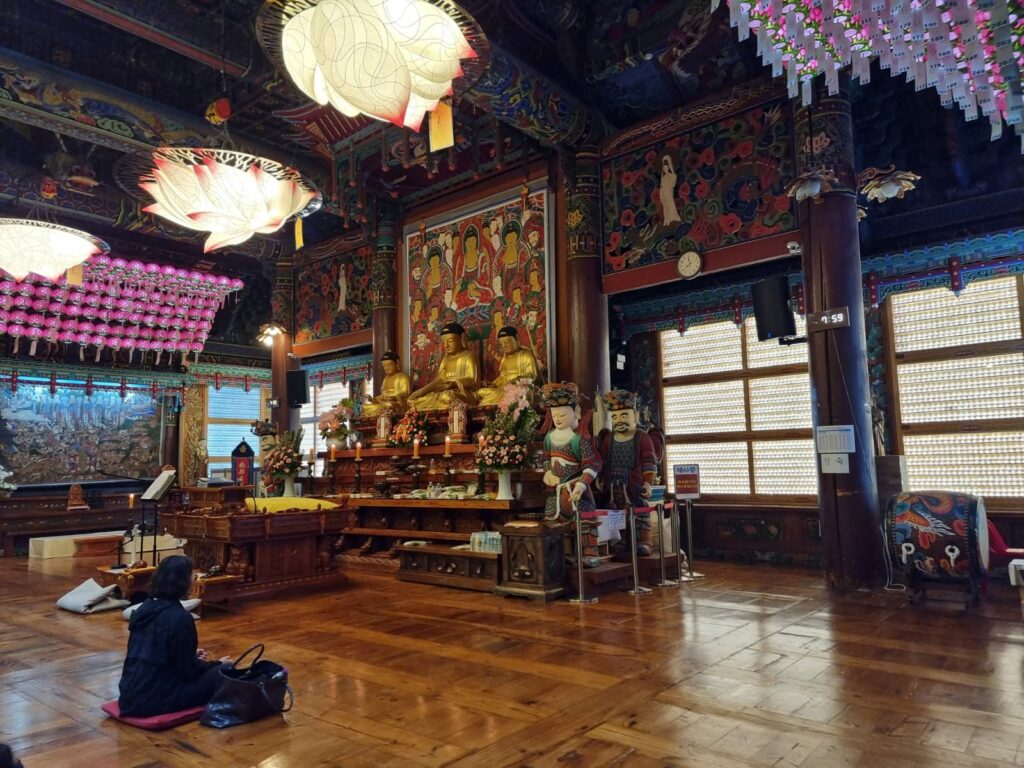
Drawings in Korean Temples
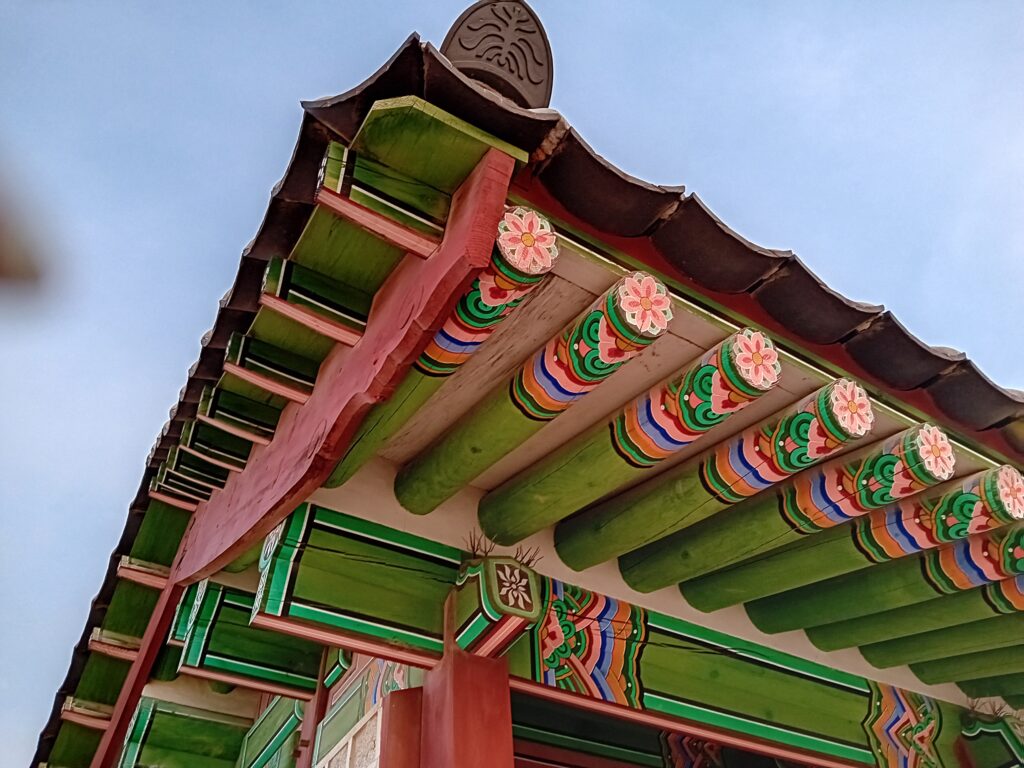
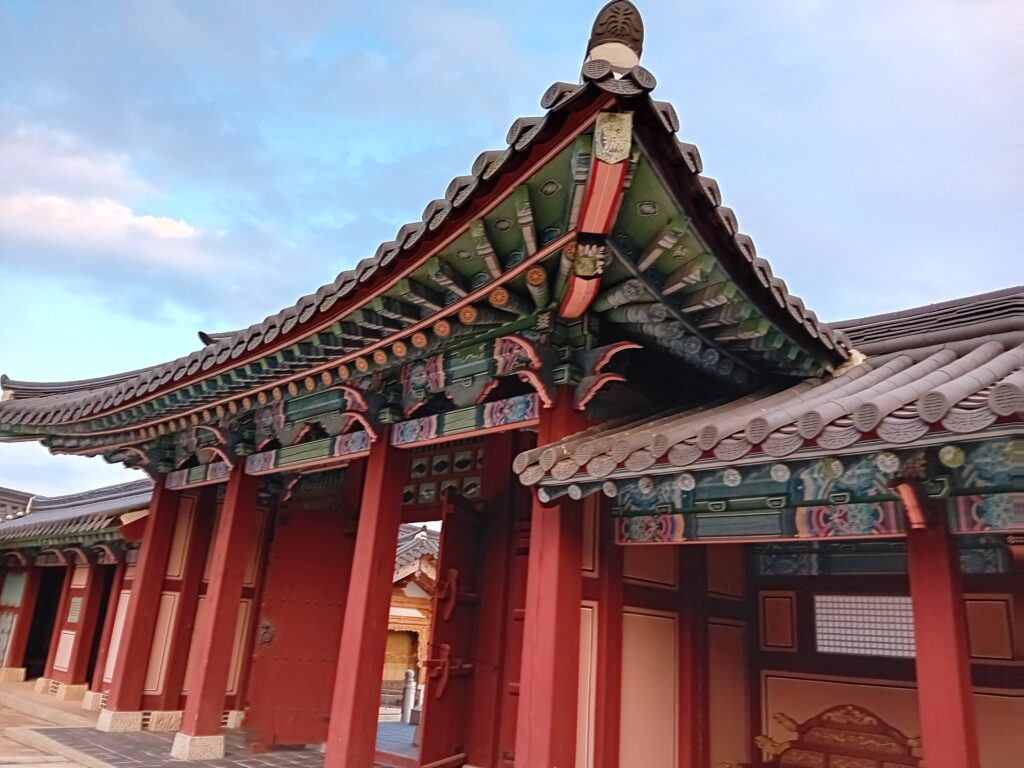
- Painted Walls (Dancheong): Korean temples often feature intricately painted walls and ceilings with colorful patterns called danchong. These designs include scenes from the life of the Buddha, bodhisattva figures, and auspicious symbols such as dragons, phoenixes, and lotuses. The bright colors and meticulous details symbolize the sacredness of the place and protect the temple from evil spirits
- Mandala: Complex circular designs represent the universe and are used for meditation. Mandalas help practitioners concentrate and reach a state of spiritual enlightenment.
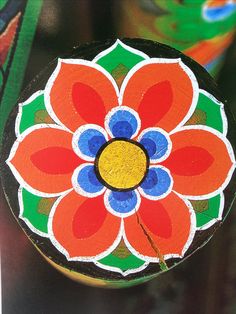
-Photo credit Pintarest
Statues in Korean Temples
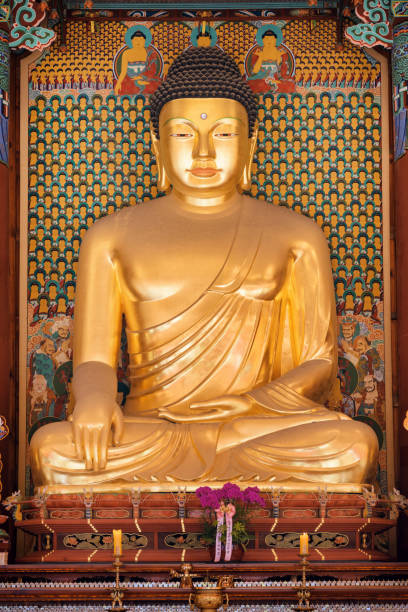
- Buddha: The Buddha statue is the most common in Korean temples. She can be depicted in various positions, such as sitting in meditation (Dhyana Mudra), standing, or lying down (Nirvana). Each posture and gesture has a specific meaning and represents different aspects of enlightenment.
- Bodhisattva: These figures are enlightened beings who renounce Nirvana to help others achieve salvation. Among the most revered are Avalokiteshvara (Kwanseum Bosal in Korean), the bodhisattva of compassion, often depicted with many arms.
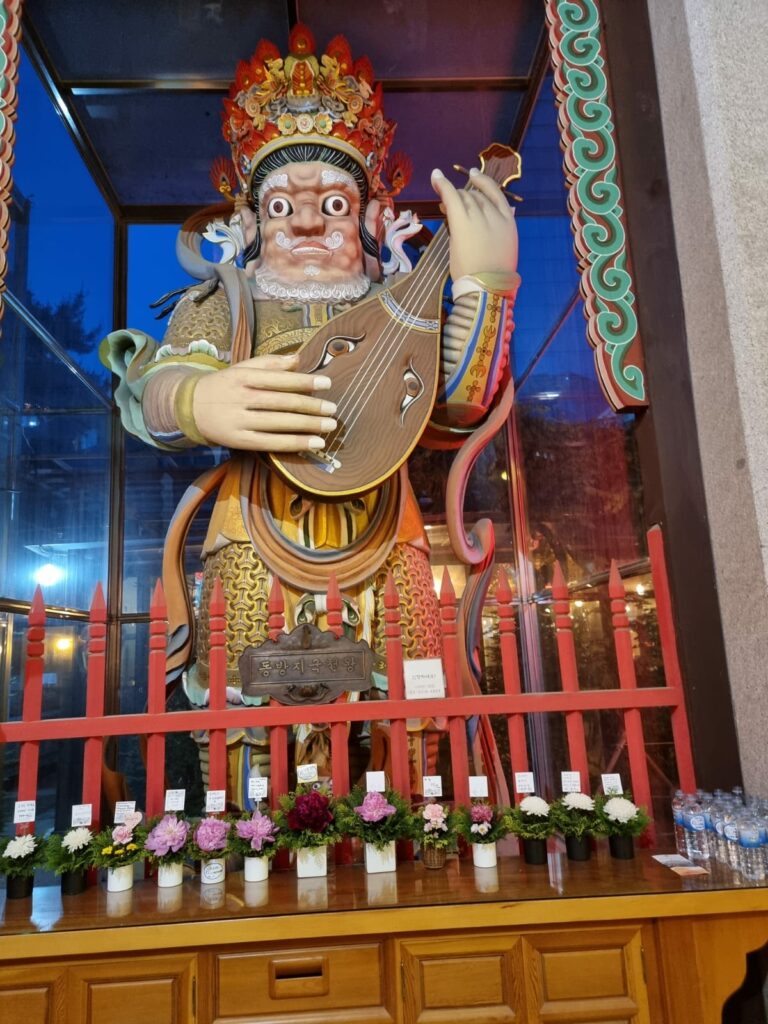
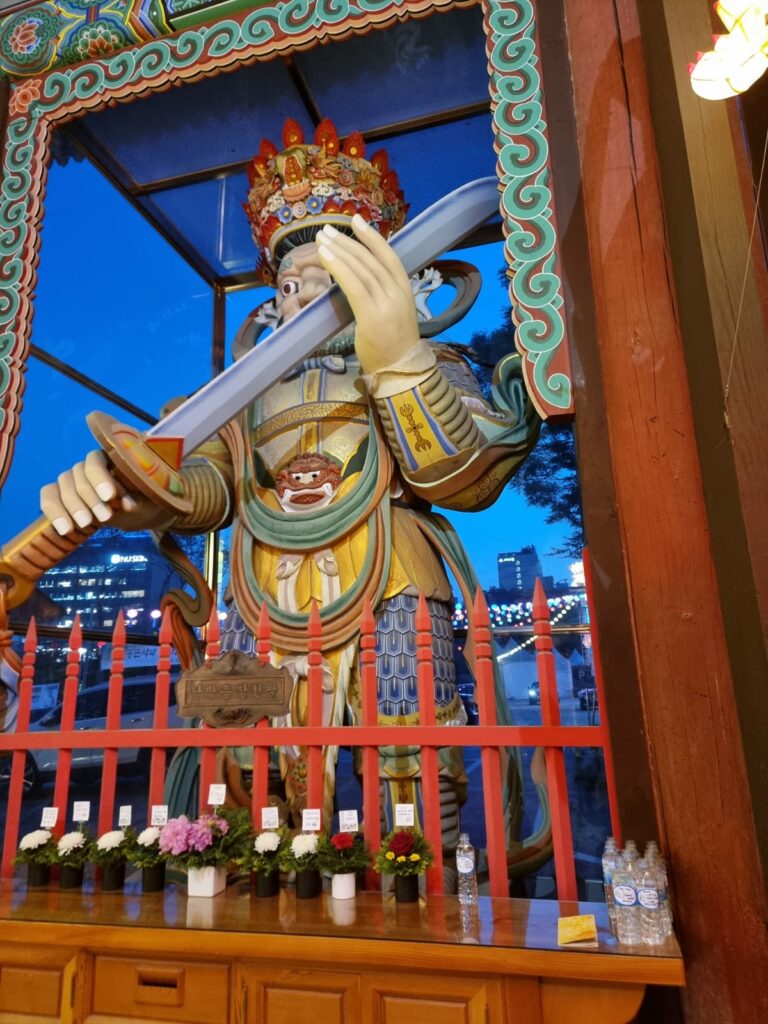
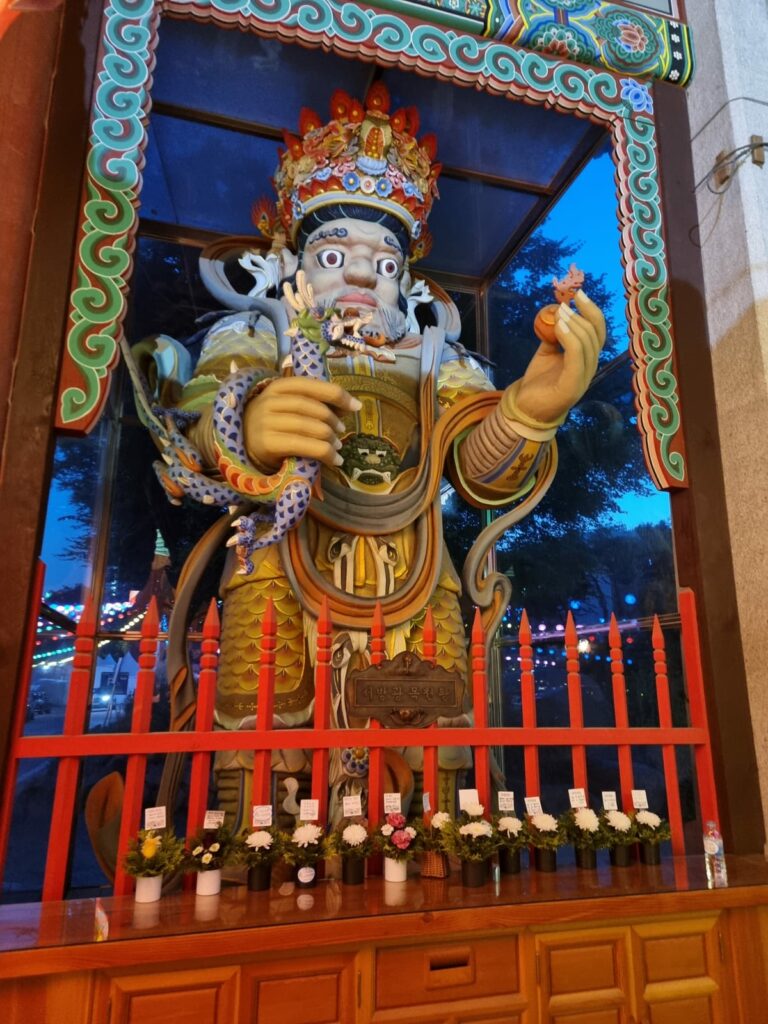
- Heavenly Guardians (Cheonwang): At the entrance of temples, statues of the Four Heavenly Kings (Cheonwang) are often found, protecting the temple from demons. These imposing figures are depicted with fierce expressions and weapons, symbolizing their strength and determination to protect the Buddha and his teachings.
- The Four Heavenly Kings, known in Korean as Cheonwang (천왕), are important figures in Buddhist tradition and are often found at the entrances of temples to protect the Dharma and the faithful. These imposing statues each represent one of the four cardinal points and are considered powerful guardians against the forces of evil.
- Dhrtarastra (East) – He is the king who supports the world and protects music. Usually depicted with a musical instrument, it represents protection against ignorance and chaos.
- Virudhaka (South) – This king dominates growth and prosperity. He is often depicted with a sword or spear, symbolizing his ability to defeat adversaries and maintain order.
- Virupaksa (West) – King of the open sight, he is the guardian who watches with a penetrating eye. It symbolizes wisdom and the ability to see the true nature of things, protecting against deception and illusions.
- Vaisravana (North) – He is the king of wealth and success. Often depicted with a tower or pagoda, it represents protection against misery and poverty.
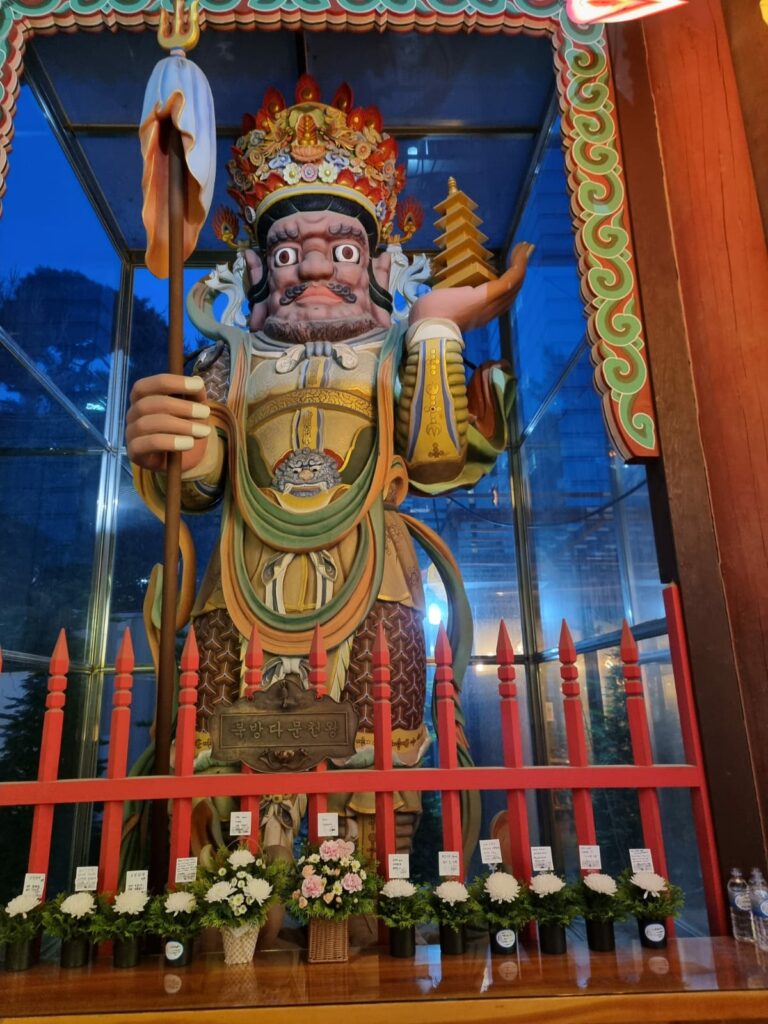
- These figures are not only symbols of protection, but also embody Buddhist values such as wisdom, prosperity, vigilance and protection. Their presence at the entrance to the temples serves to purify and protect the sacred place, creating a safe and serene environment for practitioners.
- Arhat (Nahan): They are disciples of the Buddha who have achieved enlightenment. Their statues are often found in temple halls, each depicted with unique characteristics that reflect their individuality and wisdom.
Meaning and Function
The statues and drawings are not simply decorative; they have profound importance in religious practice. They serve as focal points for prayer and meditation, helping devotees focus and connect with deities. Additionally, they tell stories and teachings of Buddhism, educating visitors on the fundamental principles of the faith.
These magnificent Korean temples are treasures of sacred art, with designs and statues that not only decorate the space, but enrich the spiritual experience of devotees. Each element, with the vibrant colors of the danchong to the serene figures of the Buddha, helps to create an environment that inspires peace, reflection and devotion.
Paola Pelissa