
At the Venice Biennale 2024, the discovery of the olfactory memory of each of us, linked to personal experience and the fragrances, scents and smells of life in Korea.
When I was asked, for KOCIS, (i.e. the Honorary Reporter of Korea of which I am a member), to write an article for them on the 2024 Venice Biennale and on the works of the Korean artists who were exhibiting this year, both in the Exhibition and at the Pavillion's Korea, I accepted with great curiosity to visit this edition. I took a couple of days off and arrived in Venice, which transported me to a reality which, I had already informed myself before, would be linked to smells and perfumes that spoke of Korea. Accompanied by the background of cicadas, I entered the Biennale, ready to immerse myself in Art.

Upon entering the Korean Pavilion, I won't deny that I was a little taken aback, the space that presents itself in front of the visitor is large and very spartan at first sight. Inside the pavilion, colors such as tiffany green and light wood that dominate practically the entire view chase each other, the large windows shed light on this structure and on the ground engraved in the wood we find the symbol of infinity that intersects chasing each other, and two round wooden sculptures that they recall the Moebius strip, infinity in real life.

Koo Jeong A's work presented at the 2024 Venice Biennale in the Korea Pavilion, entitled "Odorama Cities," is described as a multisensory experience that explores the theme of smell as a means of connection and urban memory.
After passing the first room of infinity, where the information on the Artist is found, you enter a second, where the space is occupied by a black statue in the center of the room, (at first sight it reminded me of the "Choom" dance, we will talk about it in a future article on Kotalia), stopped in a playful, light and timeless jump, as if to represent one's own child "I".

From the inside of the statue at intervals of about a minute and a half, from the inside of the statue, from the two holes in the nostrils, a cloud of perfume comes out that envelops you with fragrances and smells, which contain the essence of Korea, I personally recalled the smell of cleanness, which I have often perceived in my travels.

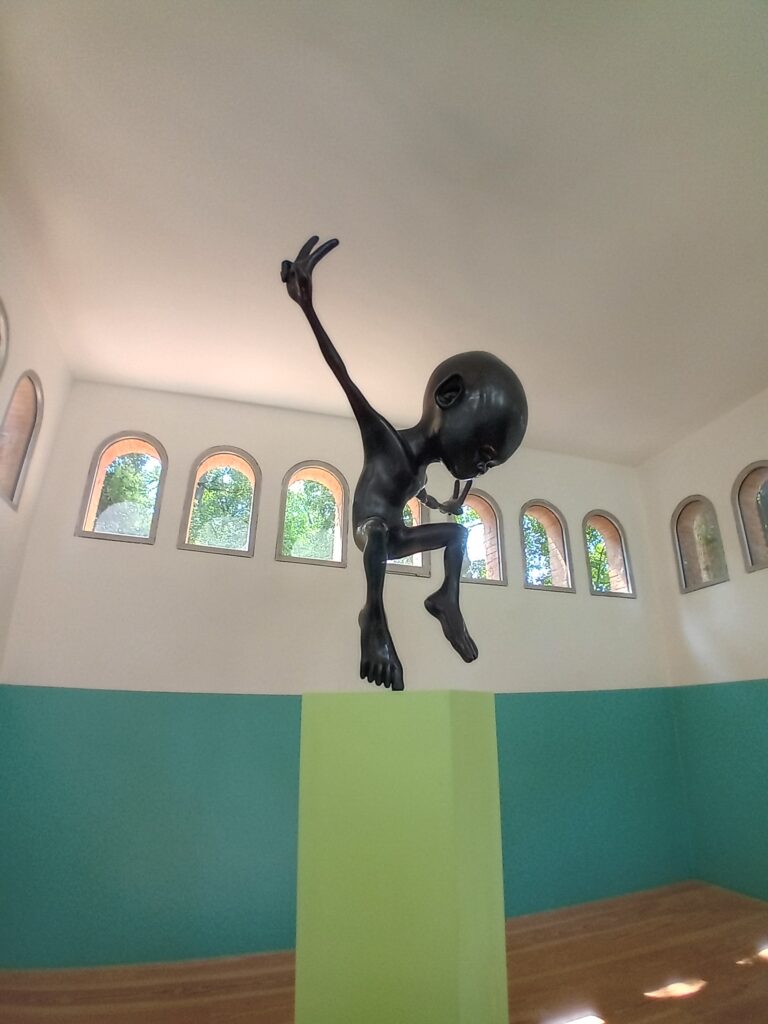
"Odorama Cities" is not only a work of art, but also a reflection on the connection between smell and memory. Koo Jeong A invites audiences to consider how smells can evoke memories and feelings, helping to build a sense of identity and belonging. In an age where cities are rapidly changing, the work also serves as a way to preserve and celebrate the unique sensory experiences that define urban life in Korea. With its creativity and depth, "Odorama Cities" represents a significant contribution of its country, offering olfactory emotions that can be extraordinarily powerful and vivid. Visitors who have had the pleasure of visiting South Korea can find among these scents the fragrances that are breathed there, those who have not yet had the experience of visiting the Country of the Calm Morning, can recognize within these fragrances of their olfactory memories the similarities of the salty scent of the sea, the burnt wood and coal, and the fragrance of freshly baked bread, even of the smell of people's used clothes, of Korean food, and with the mind reliving smells that can evoke childhood memories, taking us back to warm mornings spent in the kitchen with grandmother. The scent of flowers on a summer evening can transport us to an enchanted garden, where each petal seems to tell a love story. Even the smell of rain on dry earth can awaken a sense of renewal and hope, as if nature itself was offering us a reassuring embrace. Each fragrance has the power to touch deep strings of our hearts, weaving a tapestry of emotions and memories that enrich our life experience. an innovative and moving perspective on art and memory.

Koo Jeong A is a contemporary artist of South Korean origin, known for her works that range from site-specific installations to sculptures, drawings and videos. Born in 1967 in Seoul, Koo Jeong A has developed an artistic practice that explores themes such as space, environment and sensory perception. His works often invite the public to interact and reflect on the relationship between man and his physical and cultural context.
One of the distinctive aspects of Koo Jeong A's work is the use of unusual materials and innovative techniques. For example, he created installations using dry ice, fluorescent light and even magnets. These unconventional choices not only stimulate the viewer's curiosity, but also create immersive experiences that challenge traditional perceptions of space and time. Among the most famous works is "Oussser", a completely phosphorescent skate track, which combines art, sport and community in a unique and engaging experience.
Koo Jeong A has exhibited his works in numerous international galleries and museums, including the Center Pompidou in Paris, the Venice Biennale and the Museum of Modern Art in New York. Her ability to transform spaces and create deep emotional connections with audiences makes her an influential figure in the contemporary art scene. Through his creations, Koo Jeong A continues to explore and redefine the boundaries of art, inviting viewers to see the world with new eyes.
With "Odorama Cities", the evocative power of perfumes is one of the most fascinating aspects of our sensorial experience. Our sense of smell is closely linked to the areas of the brain that manage memory and emotions, and this makes perfumes real catalysts of memories. A simple fragrance is enough to instantly transport us to a moment of the past, making us relive sensations and feelings that we thought were lost.
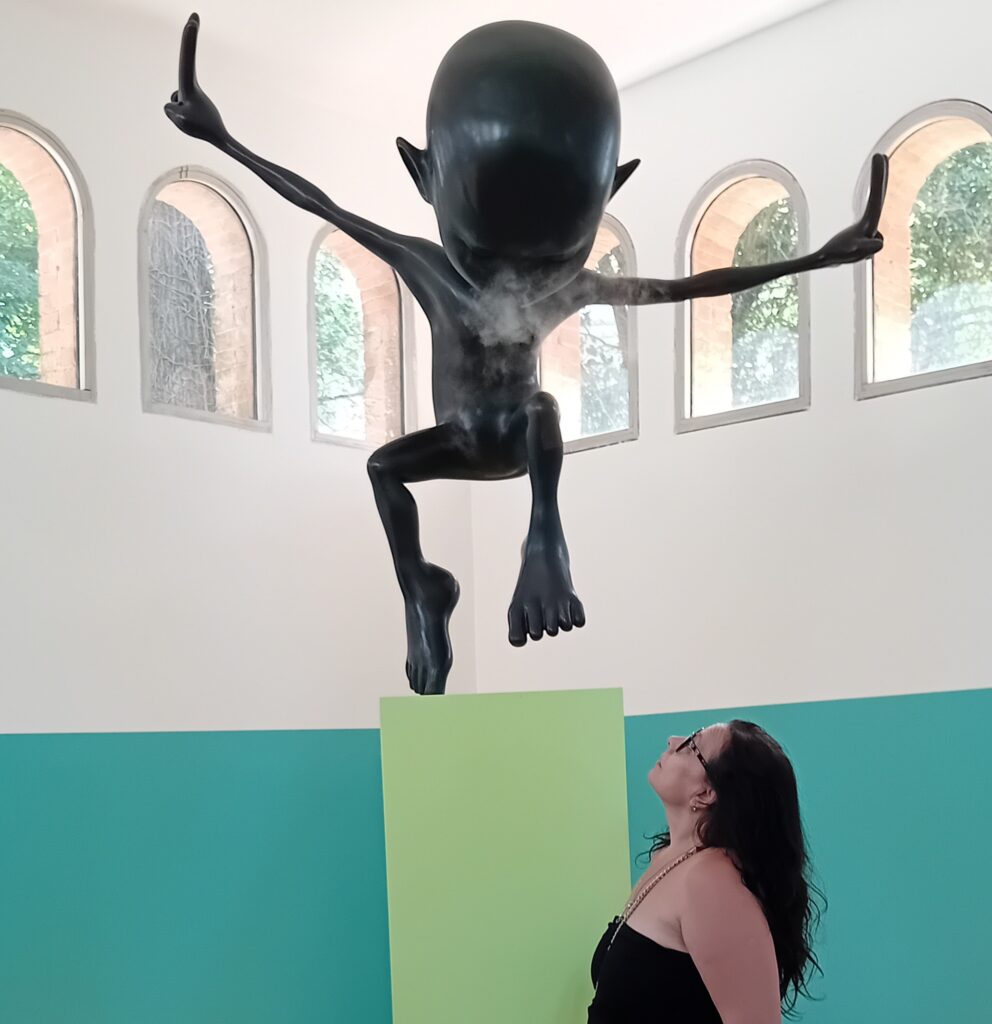
The ability to perceive through the scents of memories is a gift that allows us to keep our personal history alive. Not only does it enrich our daily lives, but it also offers us a powerful tool for connecting with ourselves and others. Taking the time to rediscover and appreciate these moments through scents can be a deeply rewarding and therapeutic experience.
Visiting this exhibition can tell you and remind you of memories that have made and are part of your past or your life.

Paola Pelissa