

-Web photos from Pinterest
Shamanism in Korea, also known as "Muism" or "Sinism", is one of the country's oldest religious traditions, with roots dating back thousands of years. The first traces of shamanic practices in Korea can be traced back to the Bronze Age, around 1000 BC, if not earlier. During this period, Korean society was highly animistic, where natural elements, such as mountains, rivers, and trees, were revered as homes of powerful spirits.

https://www.worldhistory.org/image/6015/korean-mudang-or-female-shaman
Shamanism has continued to evolve and integrate with other religions and beliefs throughout Korean history. During the Three Kingdoms period (57 BC – 668 AD), shamanism coexisted with Buddhism and Taoism, influencing and being influenced by these religions.

-Photo from 파일:서울민속.museum-totem.pole-01.jpg
Despite the introduction of Confucianism during the Joseon Dynasty (1392-1897), which sought to suppress shamanic practices as superstitions, Muism survived and adapted, maintaining its relevance in Korean culture.
This spiritual practice is based on the belief that the world is populated by spirits and deities who influence the daily lives of human beings. Korean shamans, known as "mudang" (무당) for women and "baksu" (박수) for men, have a long and rich tradition for human beings and the spiritual, performing rituals to communicate with spirits, heal illnesses, and ensure prosperity and luck.

-Wikipedia web photo
Shamanic rituals, often called "gut" (굿), are complex and colorful events involving dancing, singing, and offerings to spirits, and are still practiced today in several regions of the country.
Many Koreans see mudangs not only as spiritual healers, but also as bearers of ancient wisdom and traditions.
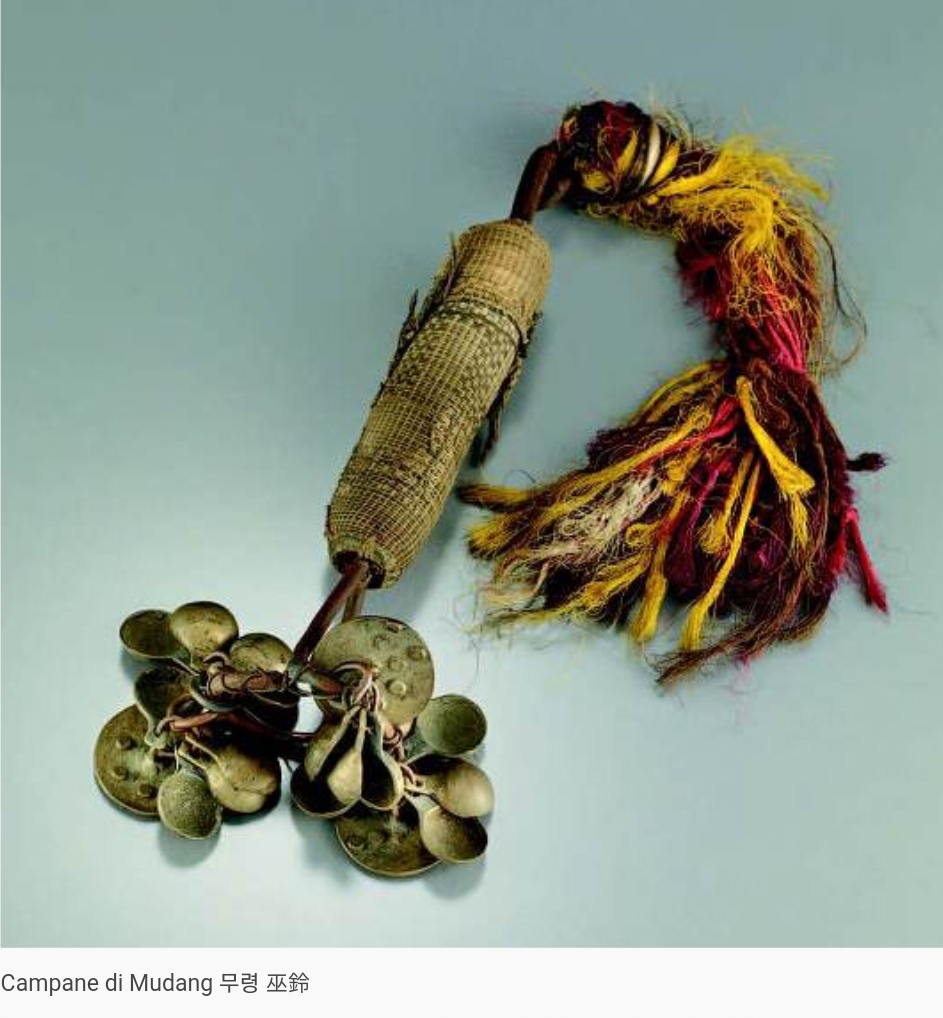
Korean shamans, known as "mudang" (무당), use a variety of ritual tools to facilitate their shamanic practices. One of the most iconic tools is the "gut" (굿), a ritual ceremony where mudang use drums, bells, and gongs to create a rhythm that helps one enter a trance state.
Another fundamental tool is the ritual dress, known as "sinui" (신의). This robe is typically decorated with bright colors and sacred symbols, representing the shaman's connection to the spiritual world.
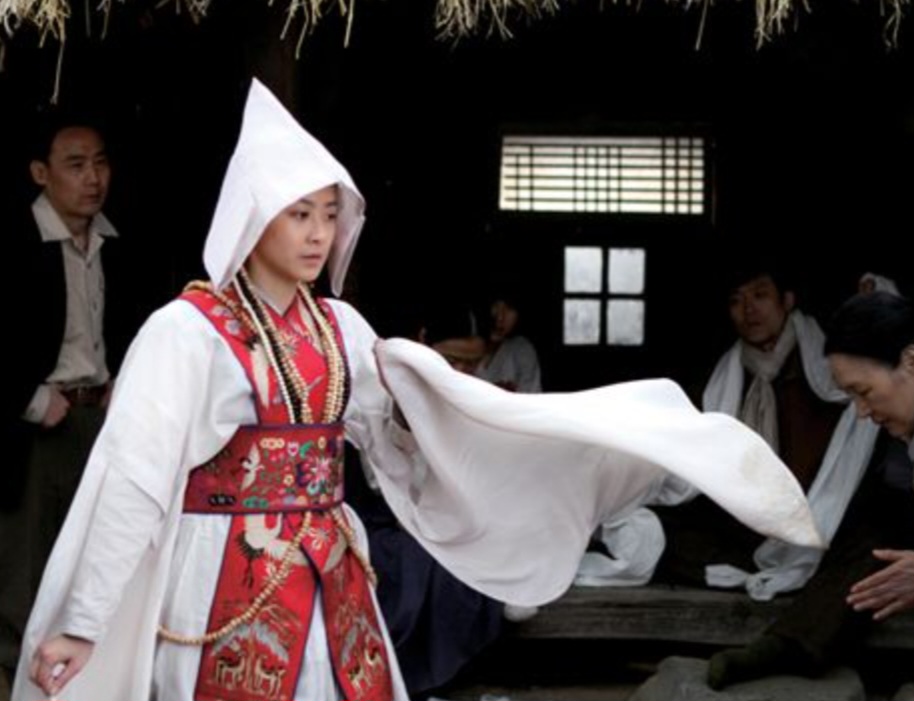
-Pinterest Web Photos
Furthermore, shamans often wear ritual masks, which help transform into different spiritual entities during ceremonies. These masks are considered powerful and sacred, as they allow the mudang to channel the energy of the spirits and communicate with them more directly.
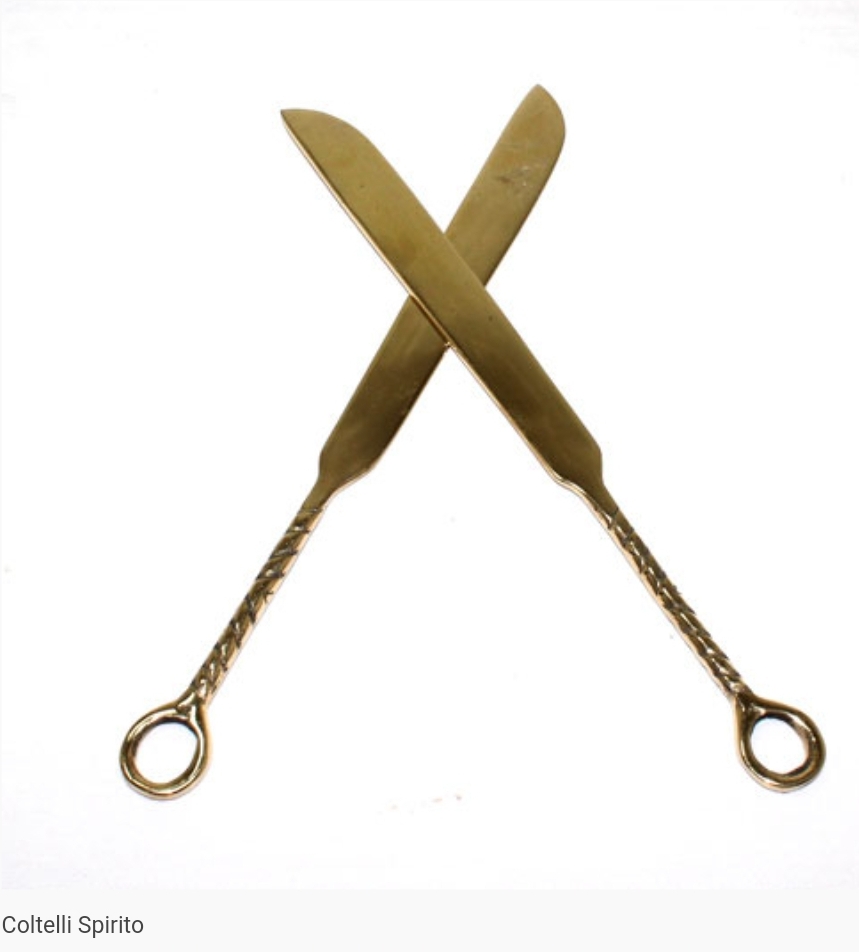
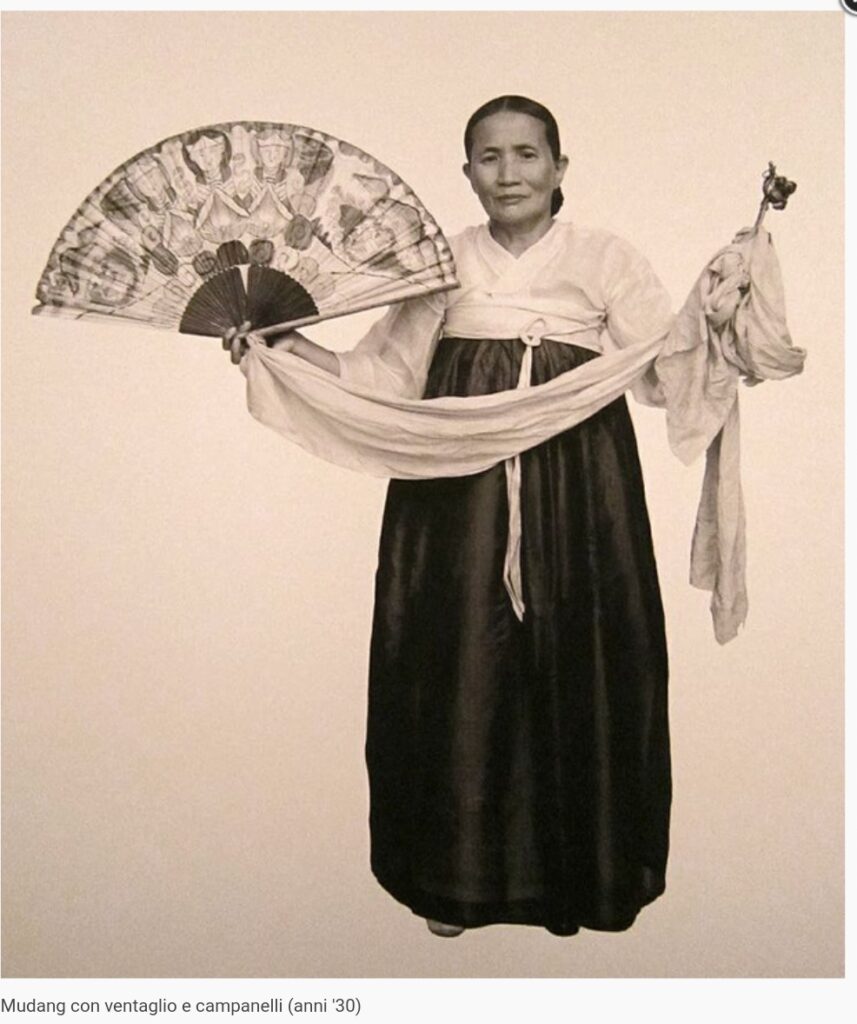
Finally, Korean shamans use sacred objects which collectively, these ritual tools are called Mugu (무구). Some of the most common types are illustrated here. These include bells, knives, spiritual swords, tridents, and large fans depicting selected deities. The costumes and headdresses.
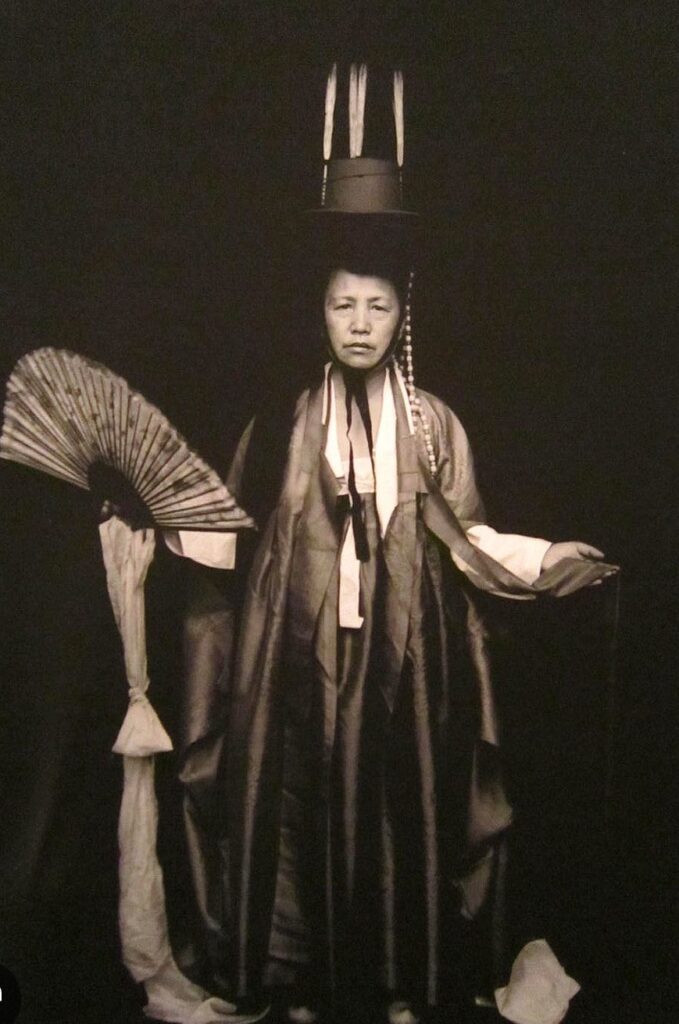
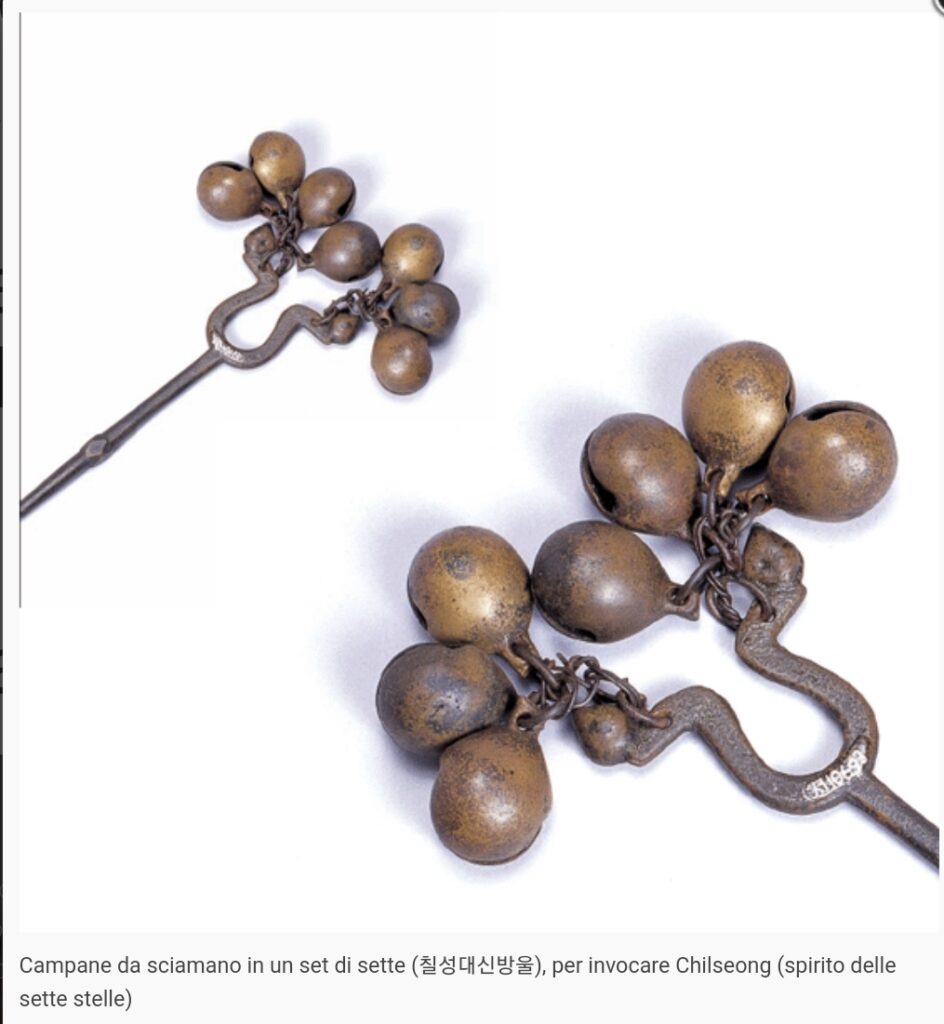
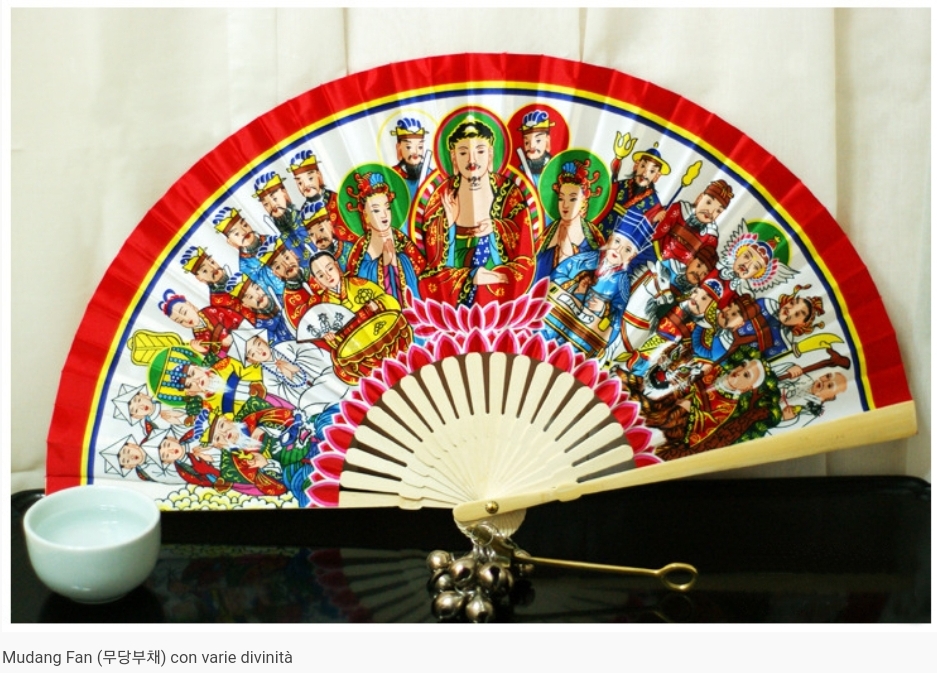



-Photo from the web https://shamanism.sgarrigues.net/
Swords serve to protect against evil spirits and cut negative energies, while fans are used to purify the ritual area and guide spirits. Mirrors, however, are seen as portals between the physical and spiritual worlds, allowing shamans to see and interact with spirits. These tools, combined with the deep knowledge and wisdom of shamans, make Korean shamanic ceremonies unique and powerful means of healing and spiritual transformation. Healing rituals, exorcisms and ceremonies to appease spirits.
Some shamans have become particularly known for their skills and their impact on society.
One of the best-known shamans is Kim Geum-hwa, considered a living treasure of South Korea. Born in 1931, Kim has dedicated her life to preserving and promoting Korean shamanic traditions.
Another famous shaman is Park Gwi-ja, who is known for his healing abilities and extensive rituals. Park has attracted attention both nationally and internationally, appearing in documentaries and conferences on shamanism.
Despite modernization and the spread of new religions, shamanism has maintained a significant presence in contemporary Korean society. Many Koreans continue to turn to shamans for spiritual advice and to resolve personal problems or work situations
Korean shamans traditionally undergo a rigorous and often painful initiation path. It is believed that many of them receive the "calling" through an experience of illness or personal crisis, interpreted as a sign that the spirits have chosen them for this role. Once the calling has been accepted, the aspiring shaman must undergo a series of training rituals under the guidance of an experienced master. This training includes learning chants, ritual dances, and knowledge of the various deities and spirits of Korean tradition.
Over the centuries, the figure of the Korean shaman has faced moments of repression, especially during eras of foreign domination and under governments that sought to promote Christianity or Confucianism. Today, while some see shamanism as an archaic superstition, others consider it a vital part of Korea's cultural heritage, offering spiritual comfort and a sense of continuity with the past.

-Pinterst web cover photo
Paola Pelissa