
The "Seonbi" in Korea
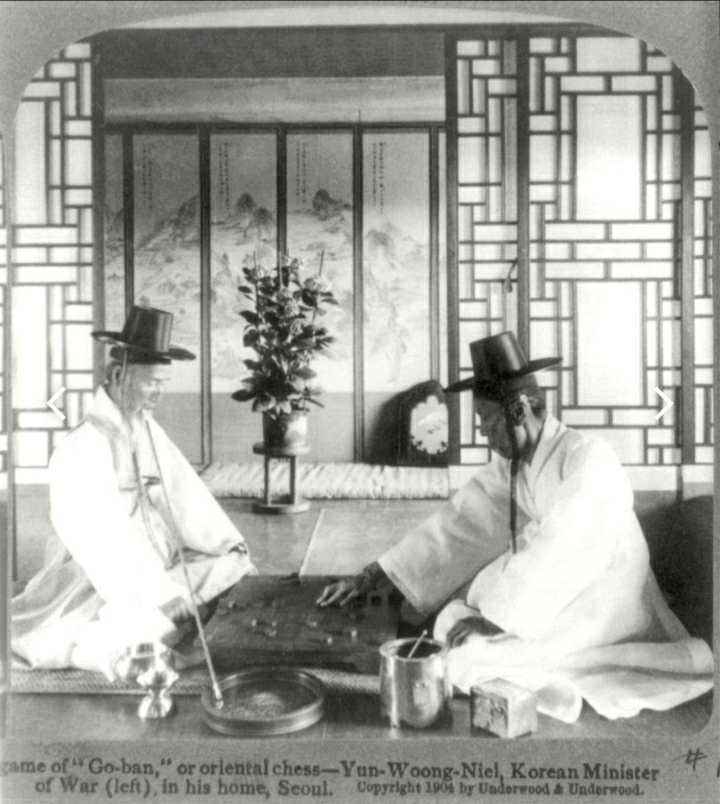
-Photo of Seonbi in late Joseon period, credits Copyright 1904 by Underwood & Underwood
Since ancient times, bamboo has been compared to 'seonbi' in Korean history.
The term 'seonbi' (선비) is purely Korean and can be translated into English as "Confucian scholars".

-Painting by 사인시음 (literati, writers, poets), Kang, hui-eon (1738~?) unknown
Seonbi can be considered as people who perform good deeds, who embrace Confucian ideology and implement it in society, that is, with Confucian personalities endowed with knowledge and virtue.
Their characteristics are that they do not crave public office and riches, therefore people who place loyalty and principles at the foreground and are highly educated and courteous.
In Korean history the 'yangban' (양반) class can be broadly classified as seonbi.
The seonbi aims to become 'gunja' (군자; gentleman) as the perfection of Confucian ethics and morals, and 'seongin' (성인; saint) in the sense of acquiring characteristics to improve the personality.
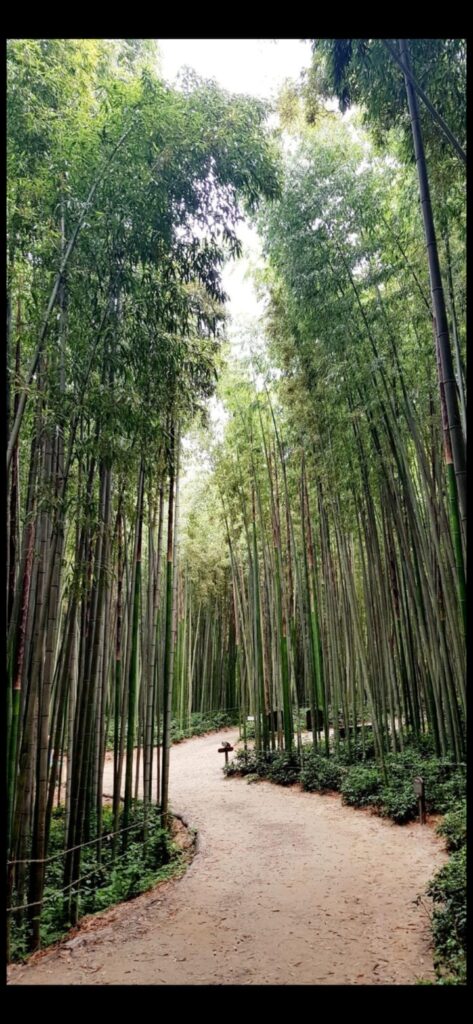
-photo credit Professor Shim Jae-hee
Why are bamboos compared to seonbi?
Among the botanical characteristics of the bamboo plant is that of being "evergreen", with a straight but articulated and hollow stem.
Considering that these peculiarities are consistent with those of the "seonbi spirits", which value loyalty, incorruptibility, rigidity, humility, etc., the seonbi took bamboo as an example, as the inspiration for their behaviors.
First of all, being an evergreen, bamboo does not wither or defoliate during the entire four-season period, therefore it does not transform its appearance. Therefore, when a seonbi observes his nature, he will think that he must act in the same way, linear and coherent, both in easy and difficult moments.
Secondly, bamboo has strong roots. When a seonbi observes his nature, he will think that he must deeply instill great virtue so that it will not be eradicated.
Third, bamboo has straight stems. When a seonbi observes his nature, he will think that he must keep his body upright so that it does not bend in other directions.
That is, he will think that it will be important to strengthen his mind so as not to compromise with injustice and dishonesty.
Fourth, bamboo is hollow. When a seonbi observes his nature, he will think that with an empty heart he must learn the "providence of emptiness" and accept others with a "selfless heart".
And fifth, bamboo has knots that enhance its growth and strength. When a seonbi observes his nature, he will think that he must work hard and relentlessly in self-training, refining his name and behavior.
Therefore, the seonbi planted bamboo near their homes and refined their characters and behaviors by meditating on themselves through the properties of bamboo.
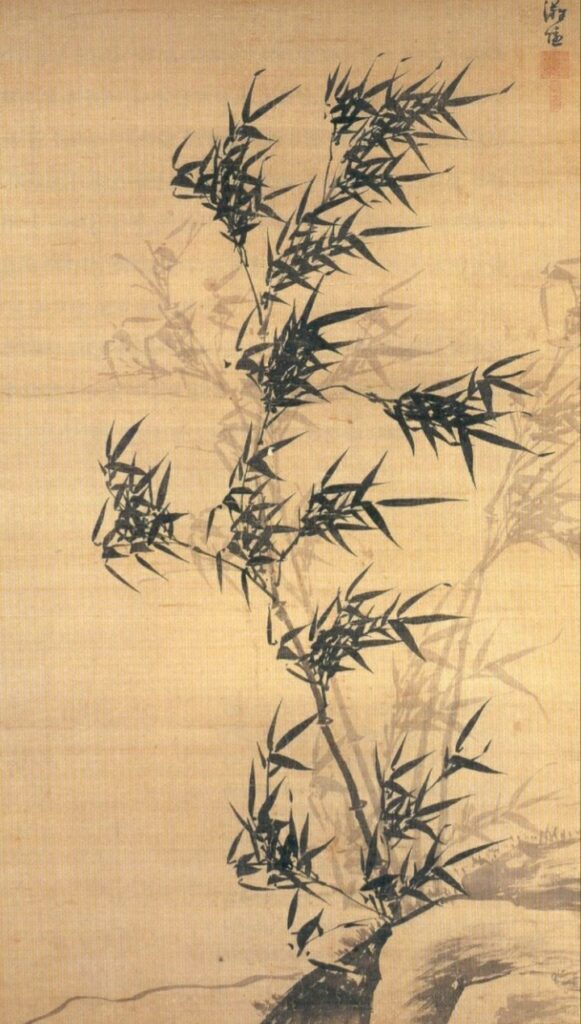
풍죽도 (Bamboo in the Wind), Lee Jung (1541~1622), early 17th century
The seonbi often painted bamboos, which they considered a symbol of constancy and incorruptibility.
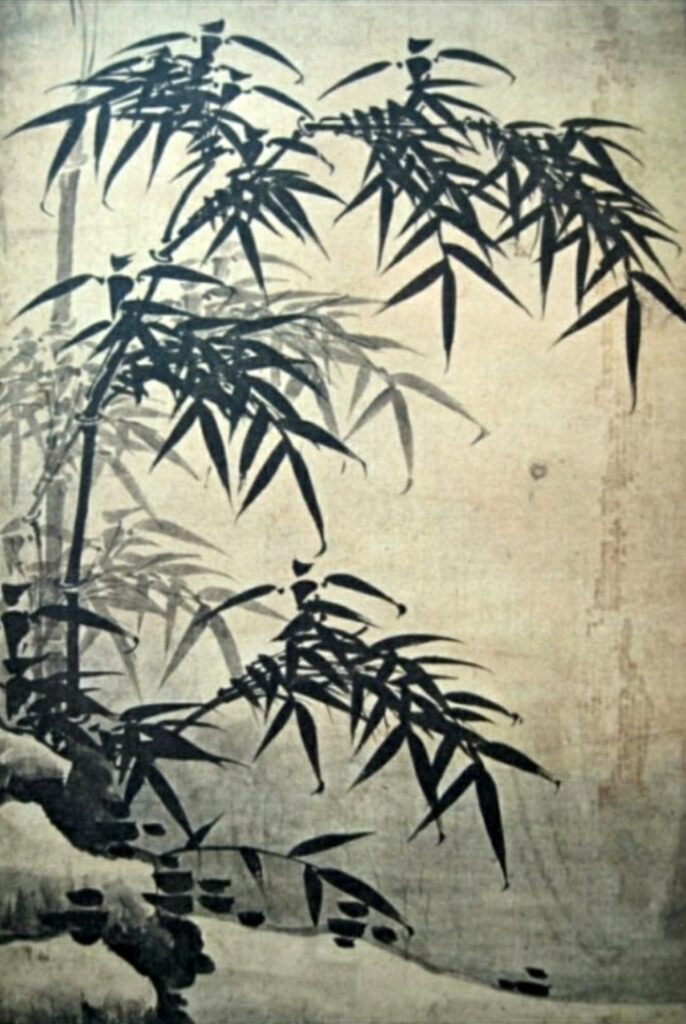
우죽도 (Bamboo in the Rain), Lee Jung, 1662.
In the East, bamboos, along with plum blossoms, orchids and chrysanthemums, have been a particularly popular subject for "ink and water" painting. These four plants are called 'sagunja' (사군자), which means “four gentlemen”.
Sagunja symbolize the plum blossom that blooms in early spring.

Painting of plum blossoms and the moon ㅡ
*월매도 (월 means Moon 매 means plum blossom 도 painted),
Kang Se-hwang (1713~1791), unknown
The orchid with its delicate scent and elegant appearance in summer.

Orchid painting
*'불이선란도' (Buriseon rando meaning Buddhist meditation and orchid)
Kim Jeong-hui (1786~1851), painting dated around 1850.
Chrysanthemum blooming in the cold autumn weather.

Chrysanthemum Painting -묵국도 (Chrysanthemum),
Shim Sa-jeong (1707~1769), unknown
The bamboo that remains upright with its leaves green and intact in winter.

설죽도 (Bamboo and Snow), Lee Jung, unknown
-Cover photo credit Professor Shim Jae-hee.
Article written by Shim Jae-hee, Professor at Chosun University in Gwangju, Korea