
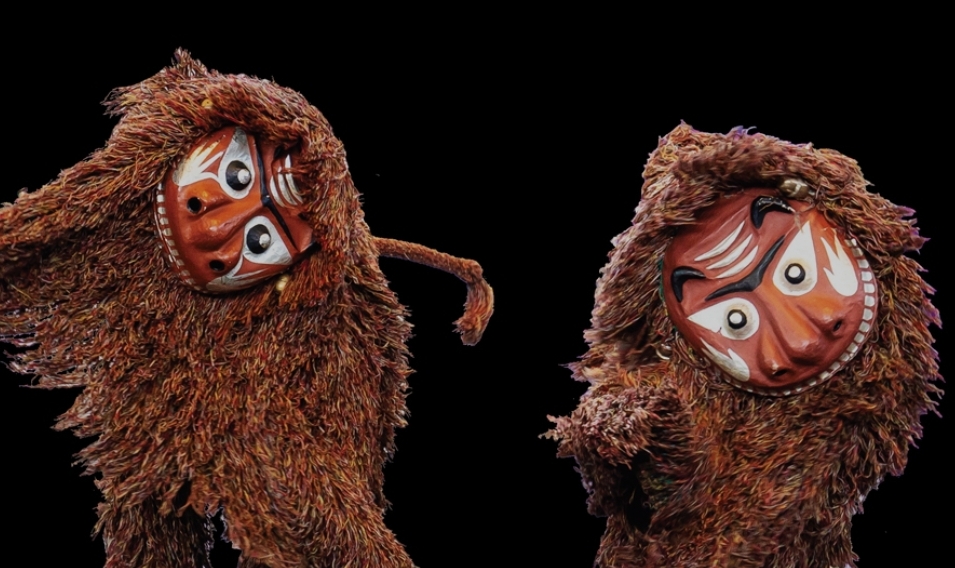
The Lion Mask, whose name in Korean is Bukcheong, is a central figure in Korean folklore, known for its cultural and symbolic importance. This mythical figure, often represented in mask form during traditional lion dances, is considered a symbol of strength, protection and good luck. Born in In 1930, in the cities of Bukcheong-eup, Gaheomyun and Gutangcheon, people from small towns decorated their lion masks and then competed with each other and the winning team received prizes to be used as scholarships, assistance for the poor and the elderly.
Lion dances are commonly performed, even today, during holidays and celebrations, more specifically on the 15th day of the Lunar Calendar, to drive away evil spirits and bring prosperity. This intricate and colorful mask is crafted with care and detail that reflects Korean art and craftsmanship. The richly decorated lion mask hides behind every movement, every jump, every beat of the drums the meaning of creating an atmosphere of sacred solemnity and of invoking the benevolence of the gods.

The Korean lion dance, known as "Sajanoreum," is an energetic and lively performance involving acrobatic movements and complex choreography. The dancers, often in pairs, work in synchrony to bring the lion to life, giving it an almost lifelike appearance, and asking it to move in figures such as the serpent, sitting or standing. The dance is accompanied by traditional music played with instruments such as the "buk" drum and the "jing" gong, which add a fast-paced and engaging rhythm to the show. The performance is not only an aesthetic display, but also a ritual intended to purify the environment and bring harmony to the community.

In addition to its role in celebrations and rituals, Bukcheong the Lion also has a significant presence in legends and stories passed down from generation to generation. These narratives often describe the lion as a guardian who protects villages from demons and calamities. The figure of the lion is also associated with values such as courage, loyalty and resilience.

The costume is elaborate and colorful, usually made from local materials, which includes a brightly painted wooden mask. Its inception has deep roots in Korean history and culture, particularly related to the Goryeo Dynasty (918-1392). Bukcheon was a significant area during the Goryeo Dynasty, and the lion became an important symbol for the region, often depicted in art, architecture, and sculptures.

Stone lions, known as "Haetae" or "Haechi", were commonly placed in front of important buildings to ward off evil spirits (we wrote an article about it here ). These lions not only served a protective function, but were also symbols of authority and power, reflecting the influence and strength of the Goryeo dynasty.

The color of the costume may vary, but each color has a specific meaning. For example, a golden lion symbolizes nobility, wisdom and divine protection. The color gold is often associated with royalty and spirituality, while the white lion represents purity, goodness and peace. White is a color that is frequently used in purification rituals and ceremonies in Korean culture, implying that a white lion could be seen as a symbol of hope and renewal. Each color of the Buckcheon lion, therefore, is not random but reflects a set of values and beliefs deeply rooted in the history and spirituality of Korea.
The masquerade dances of Bongsan, Gangnyeong, Eunyul, Suyeong, Tongyeong and Hahoe of this modern era all include a lion with different costumes and colors depending on the region and location.
Paola Pelissa