
The Korean Concubines, they weren't the Kisaeng o Gisaeng , as is often mistakenly believed, but they were women who were chosen from among the noble families or among the people to look after the Royal Family and manage internal situations in the palace.
They were known as "sugui" or "gwanin" during the Joseon Dynasty, they played significant and complex roles in Korean history and culture. These women were not simply lovers of the king or high-ranking nobles, but often held a position of influence and power within the royal court. The concubine system was hierarchical and structured.
The king's concubines were classified into various ranks and titles, each with specific privileges and duties. The highest-ranking concubine was often treated with a respect similar to that accorded the queen, and could have significant influence on political decisions and court life. However, the lives of concubines were also characterized by rivalries and internal conflicts, as many of them sought to increase their own status and that of their children.

Concubines in Korean history have had complex and variable roles, often influenced by social, political, and cultural factors. Concubines were women who entered the royal court or nobles' homes to serve as companions and mothers of potential heirs. Unlike official wives, concubines did not enjoy the same rights and privileges, but they could still gain considerable influence, especially if they gave birth to male children.

Concubines were selected through various methods, including beauty contests or recommendations. They often came from fallen noble families or lower social classes. Once they entered the court, they had to follow strict etiquette and behavior to maintain their position and promote their safety and that of their children. Some concubines managed to gain power and respect, while others lived lives of great difficulty and isolation.

Despite their subordinate position, some concubines are remembered in Korean history for their significant impact. For example, Jang Hui-bin, born Jang Ok-jung, was a concubine of King Sukjong who, thanks to her cunning and beauty, managed to become one of the most influential figures in the court. However, his rise to power was marked by intrigue and conflict, demonstrating how dangerous and precarious the lives of concubines could be. Her story is often depicted in historical dramas and literature, offering a glimpse into life's complex dynamics and power struggles. Another notable concubine was Royal Noble Consort Hui of the Goryeo court, also known as Hyeon-bi. Although less documented than Jang Hui-bin, Hyeon-bi is remembered for her influence in the period in which she lived and for her contribution to the stability of the royal court. These women, through their intelligence and political skills, left an indelible mark on Korean history, demonstrating that their role went far beyond that of simple companions of the king.
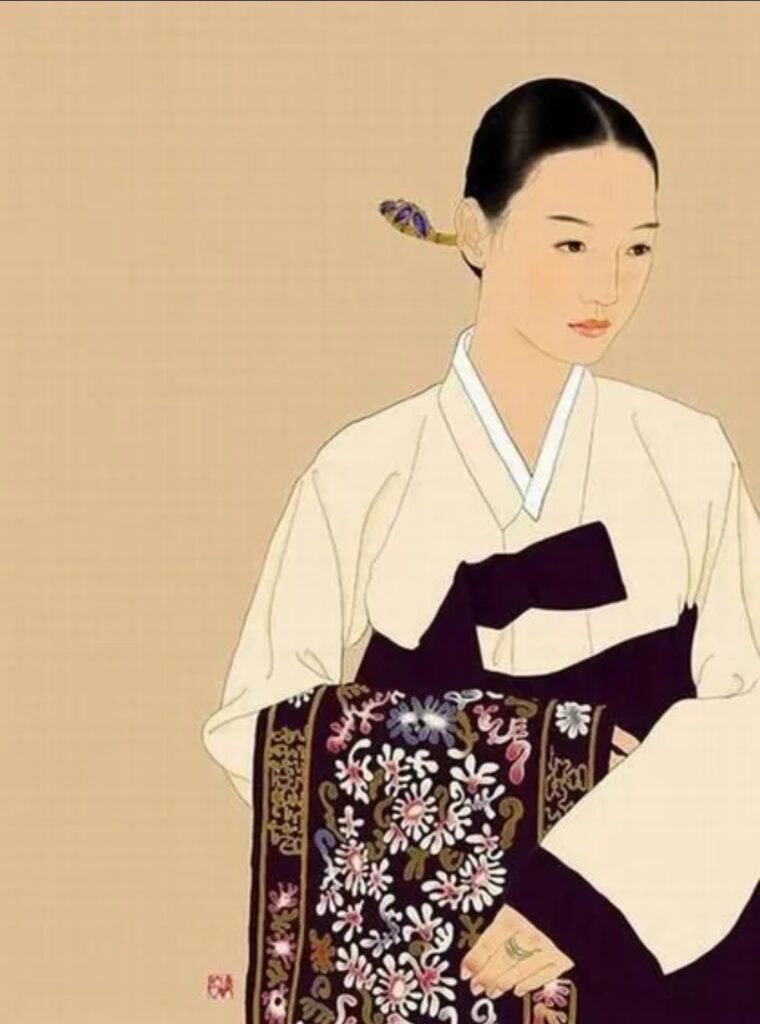
In conclusion, Korean concubines represent a fascinating and complex aspect of Korean history and culture, profoundly reflecting both the opportunities and challenges faced by women in subordinate positions.
cover photo "Beauty Portrait" by Hyewon thekbeauty.com
PAOLA PELISSA