
The oldest Ginkgo Biloba tree in Korea
Ginkgo Biloba is one of the oldest tree species in the world, often described as a "living fossil" due to its presence dating back millions of years. In Korea, Ginkgo Biloba is not only prized for its beauty and ecological value, but also for its historical and cultural importance.
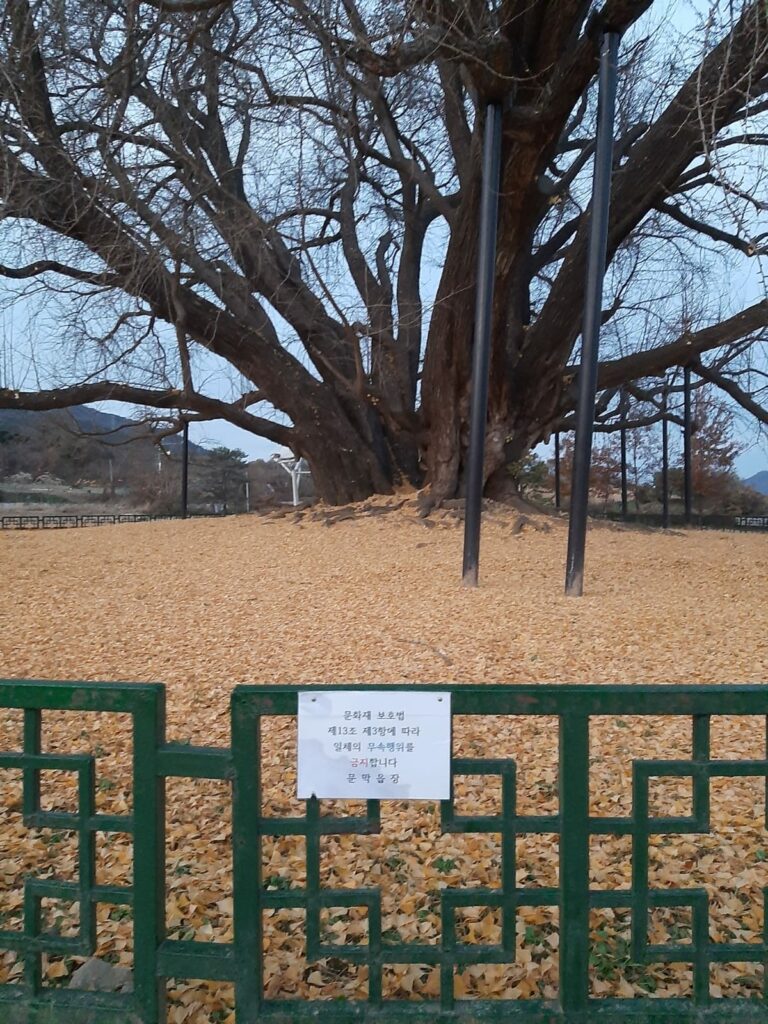
In South Korea, to be precise in the village of Bangye-ri, in Wonju in the province of Gangwon there is a wonderful ginkgo tree which is defined as the most beautiful in the world and you just need to look at the photos shared by users on the web to realize that it is not just a legend.
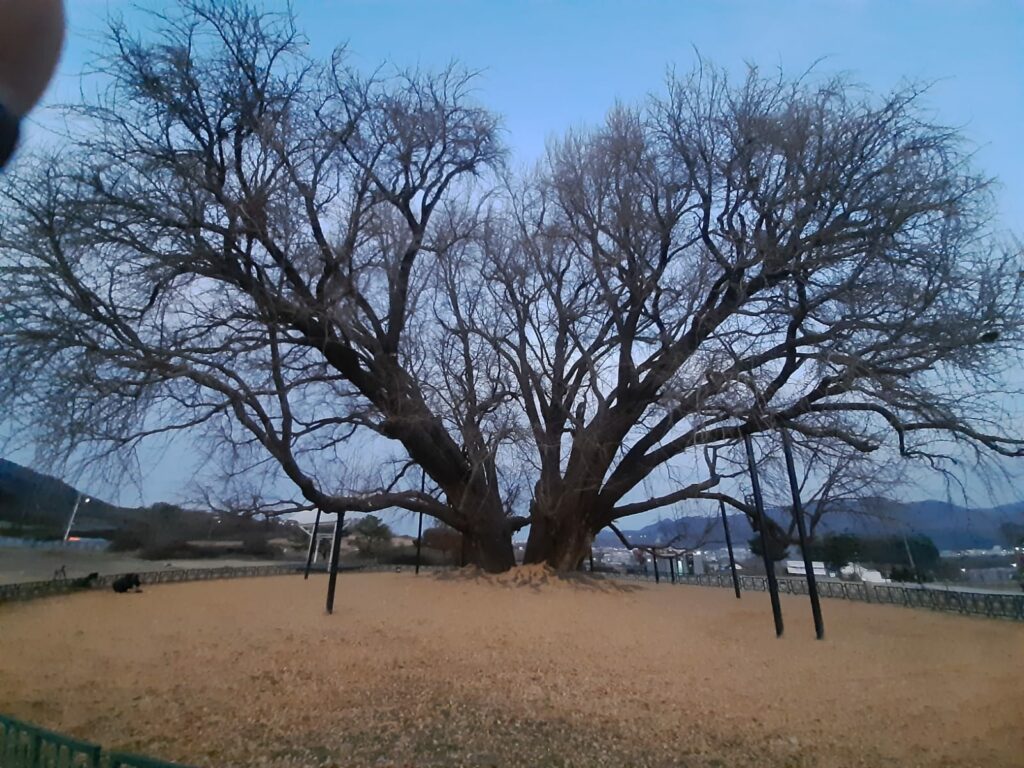
It is at least 800 years old and enormous: it is 33 meters high and boasts a diameter of over 37 meters. Considered a natural monument since 31 January 1965, it has still not lost its innate charm, indeed, every year it manages to attract millions of visitors from all over the globe, especially in the autumn period when its leaves are colored a suggestive golden yellow. In 2021 alone, for example, despite there being no restaurants or shops nearby, there were 4,000 tourists per day both during the week and on the weekend.
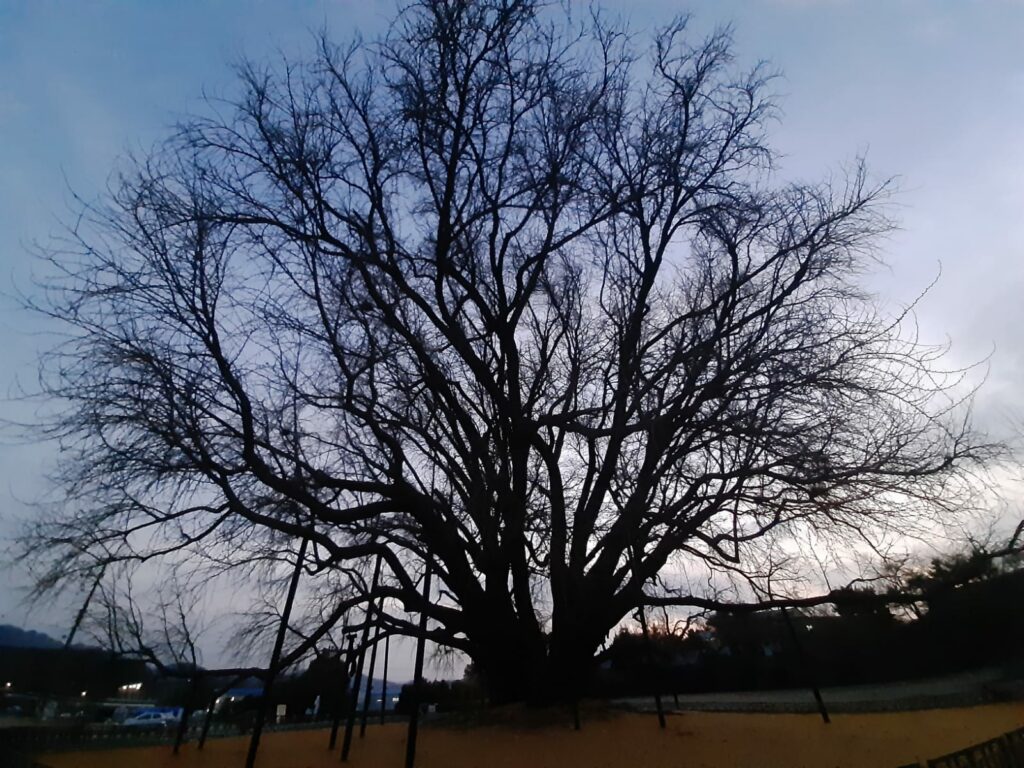
This ancient tree is considered a national treasure and a symbol of longevity and resistance, and the locals have always shown reverence and care for it, believing it to be sacred. There are some legends linked to the birth of this tree, in one it is said that a white snake lives inside it which would make it precious and lush, and if during the autumn, the tree had had its leaves totally yellow in the same period, there would have been rich and prosperous harvests for the coming year. Another legend sees Prince Seongju Lee who fled during the war to avoid being killed by enemies and claim the throne after returning with allies. As he passed through that area on foot he found shelter and comfort and planted his stick in the ground, which then transformed into this Ginko tree.
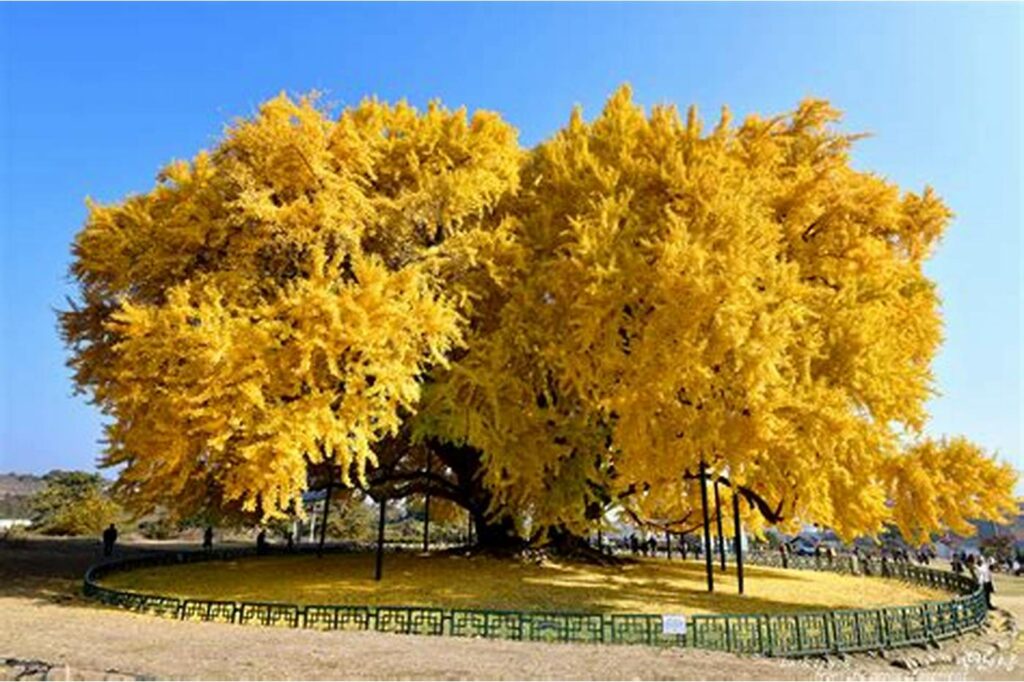
The Ginko tree symbolically represents the opposition between people, fusing the two parts together, like heart and head, binding the spirit together, creating a balanced union between our often opposing parts.
The smell that its seeds give off, because they are covered with a fleshy casing, is really strong and for many disgusting, you have to be very careful when walking among the Ginko leaves, unfortunately in contrast to the breathtaking beauty of the soil strewn with these golden leaves you will find yourself, after having walked through them, with the soles of your shoes not exactly scented.
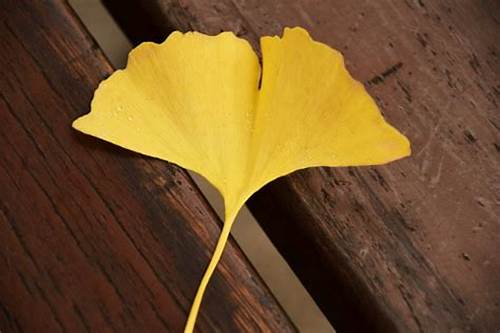
The peculiarity of the Ginko leaf represents the emblem of two lovers who unite in an act of love given the shape of the two lobes which seem to merge together
With infusions of dried leaves you can prepare a tea which is indicated for lack of concentration and is drunk to improve attention to study but also at work, especially in moments of great psychophysical stress.
Due to its historical and cultural importance, the tree is protected by local and national authorities, and has been elected a "National Monument" since 31 January 1965. Continuous efforts are put in place to ensure its health and longevity, including regular checks of soil conditions and the surrounding climate.
- photo credit web cover
Paola Pelissa