
a mythological animal that is still considered the symbol of Seoul today to protect the city.
The Heachi, also known as Haetae or Haechi, is a Korean mythological creature that has deep roots in the country's history and culture. This symbol represents a lion that possesses traits of a dog and is often depicted with a horn on its head and fish scales on its body.
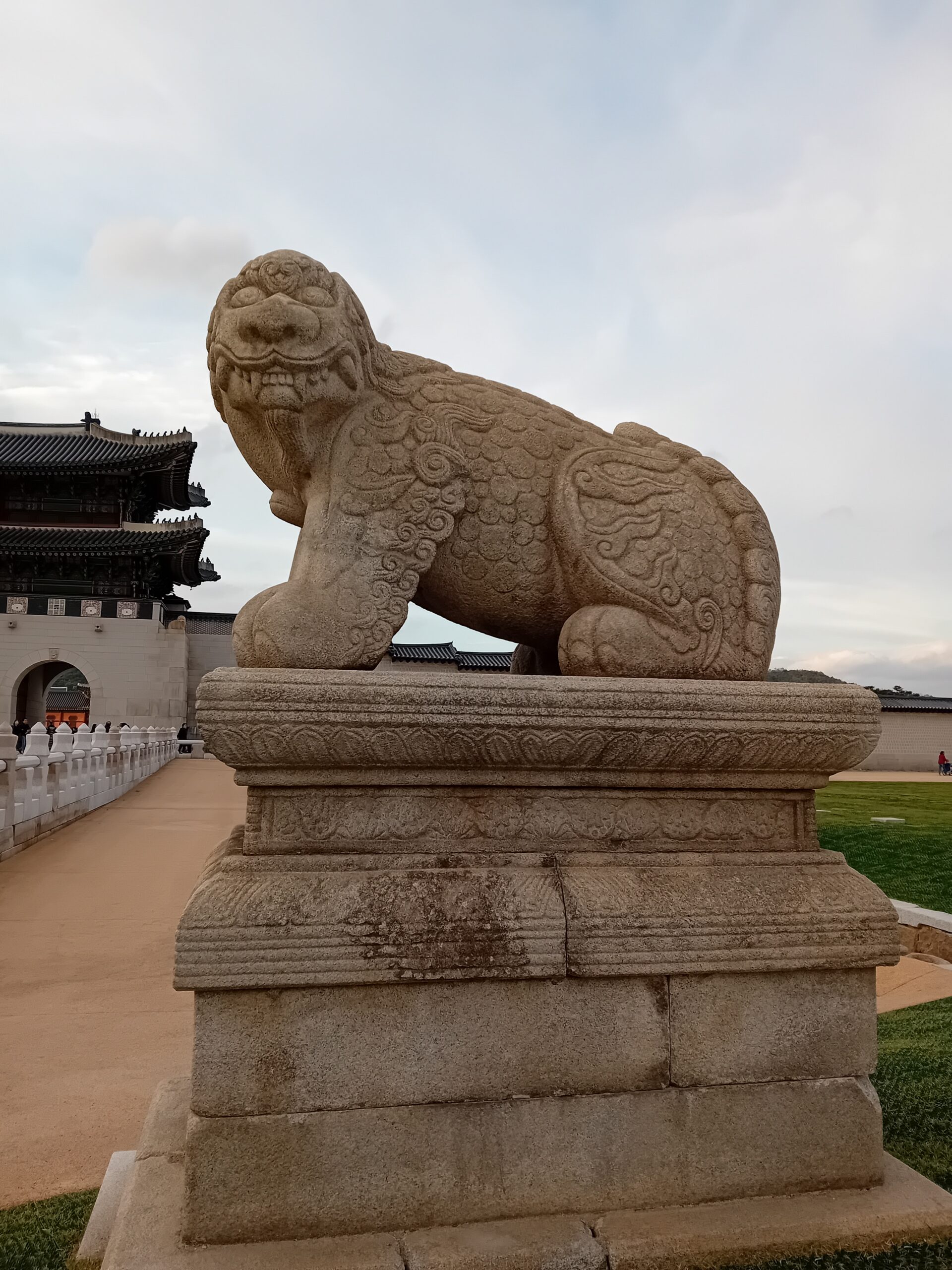
Heachi Seoul Gyeongbokgug Palace -Photo Paola Pelissa
The Heachi is considered a protective guardian, often associated with justice and protection against fire and natural disasters. In the Joseon Dynasty, it was common to see Heachi statues placed at the entrances of palaces and temples to ward off evil spirits and protect sacred buildings. One of the most famous Heachi statues is located in front of Gyeongbokgung Palace in Seoul, the royal residence during the Joseon Dynasty. This pair of Heachi statues is placed at the main entrance, Gwanghwamun, and represents two guardians who protect the palace and its inhabitants. Their presence is symbolic and reassuring, suggesting that the place is well defended against evil influences.

Photo Paola Pelissa

Photo Paola Pelissa

Photo Paola Pelissa

Photo Paola Pelissa
His image was also used in official ceremonies and court rituals as a symbol of authority and protection, the Haechi discerns good and evil and was the symbol of kingship of the Joseon Dynasty and the Saheonbu (office of the Inspector General of the Joseon Dynasty). Therefore, government officials in Saheonbu wore hats with the Haechi drawn on them.
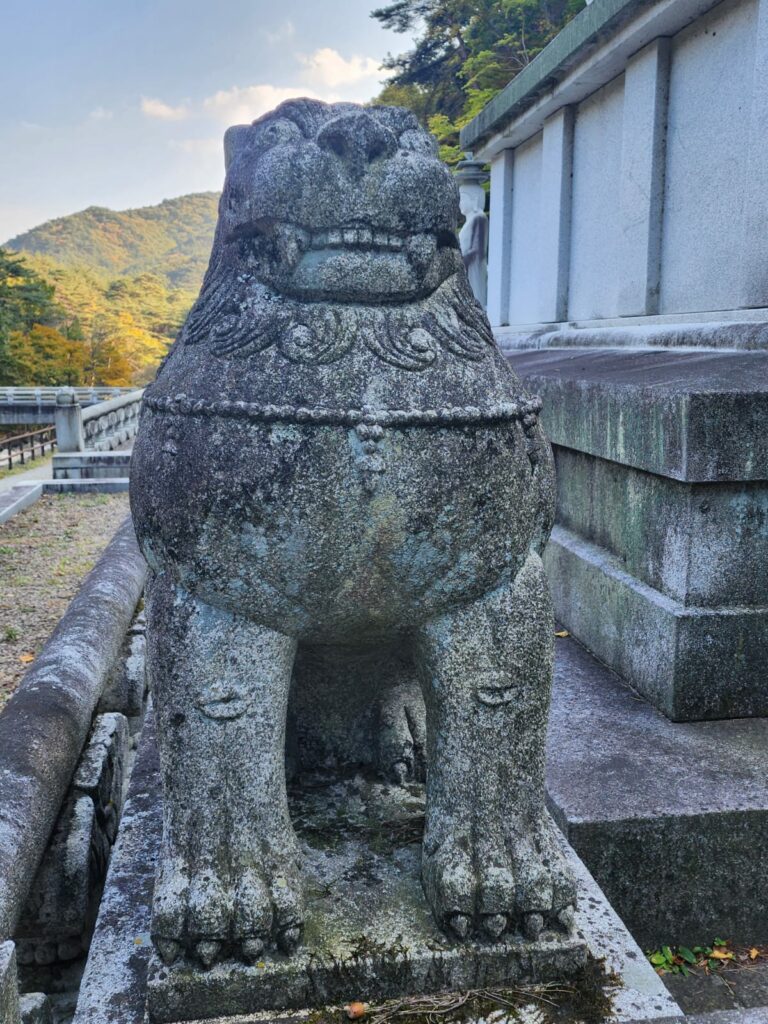
Ancient statue of HeaTae or Heachi at Hapcheon Temple -Photo Tae Kyu
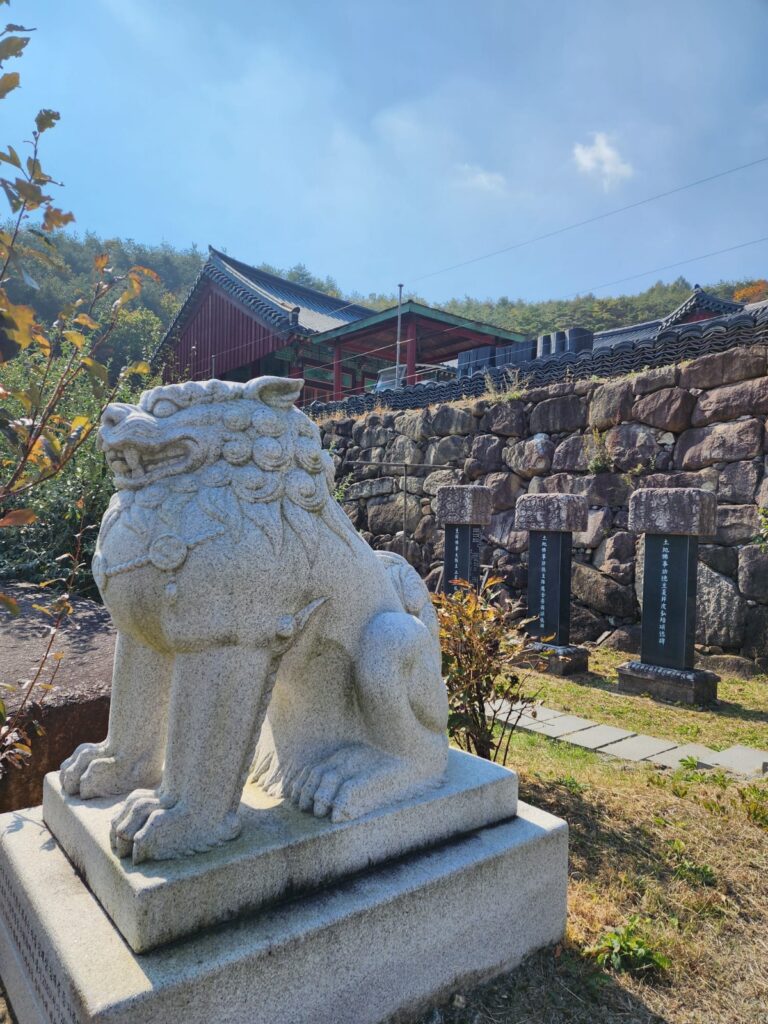
Statue of HeaTae or Heachi at Hapcheon Temple -Photo Tae Kyu
Today, the Heachi continues to be an important symbol in South Korea, especially in the city of Seoul, where it was chosen as a city symbol. Heachi statues can be seen in various locations around the city, and the symbol is used in many official and cultural contexts. The Heachi figure not only represents Korean history and culture, but also embodies the values of protection, justice and strength that are dear to the Korean people.
Another famous representation of the Heachi is found in the Jongno neighborhood, also in Seoul, where a large statue of the Heachi was erected in 2009 to promote tourism and culture.
The Haechi sculpture in front of Gwanghwamun Gate was made by a mason named Lee Se-wook during the Joseon Dynasty. During the Joseon Dynasty, tigers were often seen. Haechi is a fictional animal, but there are similar parts to the tiger's paw outpost and it is easy to imagine that sculptors of the time had studied and incorporated parts of his body into the structure, copying them from life.
For the Koreans this Mythological Animal represents the incarnation of the supernatural and of the guiding spirit towards earthly and otherworldly Justice, a Guardian who with a proud and ferocious gaze seems to read inside you and judge you for better or for worse, the one who for centuries and centuries has and will protect Seoul from every danger and disaster, if you happen to see it with your own eyes in its magnificence you cannot help but feel a strange emotion when you find yourself in front of this stone creature, you will have the impression of entertain you with the Korean spirit and soul.

Paola Pelissa