
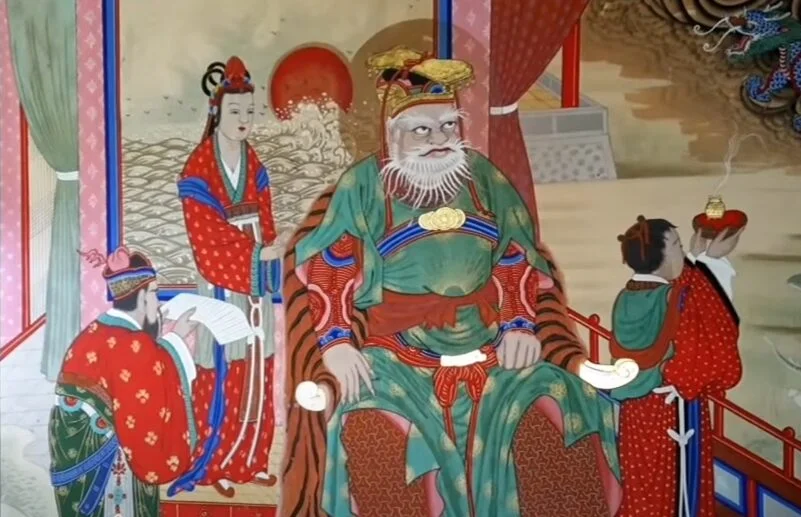
The Korean Dragon God, also known as "Yong" (용), is a mythological figure of great importance in Korean culture and legends. One of the main characteristics of the Korean Dragon God is his ability to transform. Korean dragons can change shape at will, appearing as humans or other creatures, and this ability makes them extremely powerful and versatile. Additionally, they are known for their intelligence and wisdom, often serving as advisors and protectors to kings and nobles. Their presence is seen as a sign of auspiciousness and blessing.

Korean dragons, also called Imoogii, are often characterized by a distinctive physical appearance. Typically, they have long, serpentine bodies, with fish-like scales, deer antlers, eagle claws, and a magical pearl under the chin, representing wisdom and spiritual power. This combination of natural elements symbolizes their connection to different aspects of the natural world. Depictions of the Dragon God are often featured in Korean art, literature, and cultural celebrations.
Korean sea dragon gods are fascinating figures in Korean mythology and folklore, playing a significant role in the country's religious and cultural beliefs. Among these deities, Yongwang is one of the best known, he is often depicted as a powerful dragon who controls waters and storms. He is revered by fishermen and sailors who seek protection and good luck during their sea voyages. Temples dedicated to Yongwang are found along the coasts, where devotees offer prayers and sacrifices to calm the waters and ensure an abundant catch.
Another important figure is Haesin, the god of the sea, who possesses the power to govern all marine beings and oceanic forces. Haesin is often invoked for his benevolence and his ability to protect people from natural disasters such as tsunamis and typhoons. Stories about Haesin are often intertwined with tales of heroes and epic challenges, reflecting the intense relationship between man and the sea in Korean culture.
Korean sea deities not only represent the power and vastness of the ocean, but also the Korean people's spiritual connection with nature. These deities are celebrated through festivals, rituals, and oral narratives that continue to be passed down from generation to generation. They represent a bridge between the human and natural worlds.
reminiscent of Le haenyeo, the legendary underwater fishermen of Jeju Island in South Korea, practice a unique and fascinating ritual before each dive.

These courageous women, often working without modern diving equipment, invoke the protection of marine deities to ensure their safety and success in harvesting marine resources.

The invocation ritual, known as "bulteok", is a sacred moment in which haenyeo gather around an altar located near the shore. Here, they offer rice, fruit, praying for the protection of the waters. This ritual is not only an act of faith, but also represents a deep cultural and spiritual connection with the sea, which is at the center of their daily life and livelihood.
Cover photo web source Pinterest
Paola Pelissa