

Chuseok is one of the most important holidays in South Korea, often compared to American Thanksgiving. This celebration, also known as "Hangawi," has ancient roots and is a time of gratitude for a bountiful harvest, remembrance of ancestors and strengthening family bonds.
Historically, the Chuseok originates from gabae (가배), that is, from the day when, in the period of the Kingdom of Silla, the king had induced a weaving competition between two teams which ended with the victory of one of them. The day of. arrived gabae, the team that had managed to weave the most was declared the winner and was offered a banquet by the opposing team that had lost. Another historical news also says that the Chuseok marked the day Silla won against the Beakje kingdom, and weaving, archery and martial arts demonstrations were organized for that day to celebrate.

Many scholars also believe that the Chuseok is linked to shamanic rituals to celebrate and honor the arrival of the "Harvest Moon". Since this ritual saw the gesture of offering the new crops as an offering to local deities and ancestors, the Chuseok it may have originated as a worship ritual.
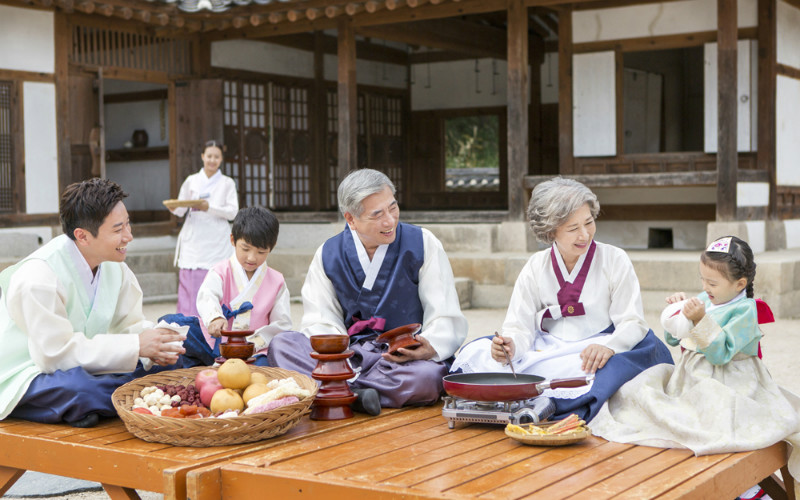
The holiday falls on the fifteenth day of the eighth month of the lunar calendar, when the moon is full. During Chuseok, Korean families come together to celebrate with various rituals and traditions. One of the central elements of the festival is "charye," an ancestral ceremony in which carefully prepared foods are offered to the spirits of the ancestors. This practice reflects Korean culture's deep respect for one's ancestors and the continuity of the family.

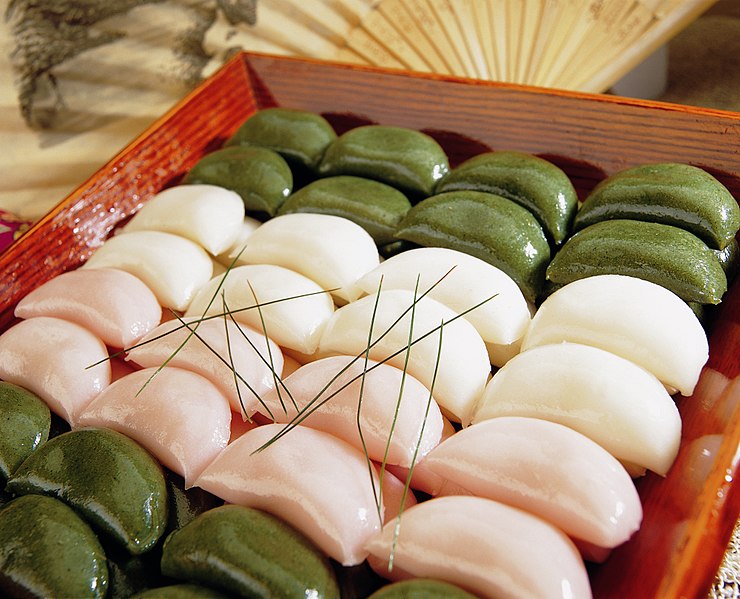
Another important aspect of Chuseok is the food. Traditional dishes include "songpyeon," a kind of rice dumpling filled with ingredients such as red beans, sesame and chestnuts. These dumplings are often prepared as a family, with each member participating in their preparation. Other dishes such as "jeon" (Korean pancake) and various types of "namul" (marinated vegetables) are also common during the holiday.

Furthermore, Chuseok is a time of traditional games and entertainment. One of the most popular games is "ganggangsullae," a round dance performed by women in traditional costumes under the full moon. Other traditional games include "ssireum" (Korean wrestling) and "yutnori" (a board game).


Chuseok is not only a celebration of the harvest, but also an opportunity to strengthen family and community bonds. People who live far away return to their places of origin, filling the streets and means of transport. This annual trip is an opportunity to reconnect with your roots and celebrate the continuity of life.
During the week of Chuseok, families carry out some rites to remember their deceased, and are mainly celebrated by the head of the family and passed down and taught to the first-born male children of the family. One of them is the charye, which has been practiced by thousands since ancient times. It takes place on the morning of Chuseok, when you celebrate a function for your ancestors, honoring and thanking the previous four generations for favors granted. In fact, it is believed that a person, even if physically dead, remains in spirit form to protect their descendants, therefore food is offered to them, and the door of the house is often left open to allow the spirit to enter the house. The arrangement of the dishes charye on the table must be precise: rice and soup in the north, fruit and vegetables in the south, meat in the west and centre, rice cakes and drinks, such as makgeolli or soju, in the east.
the week preceding the Chuseok it is a common habit to prepare two other moments that see the commemoration of one's deceased, the first is the seongmyo which consists of visiting the tombs of ancestors, while the beolcho in removing weeds from the tomb, and sees Koreans busy cleaning the place where the remains of their loved ones rest.
If in South Korea the Chuseok it is celebrated with days of holidays dedicated precisely to the meeting between families, where we move from one city to another with the consequences of chaotic traffic everywhere. In North Korea, the celebration has great differences. Since the day of division, South Korea has adopted a Westernized culture, so it is customary to spend the Chuseok having fun with the whole family, while North Korea avoided celebrating it until the mid-1980s.
Although most North Koreans do not gather with family during the Chuseok, we try to go to the graves of our ancestors. However, poor public transport makes these moments of visits to their deceased almost impossible. The high cost of food and the socio-economic problems that North Korea experiences also often prevent the poorest citizens from celebrating; on the contrary, the wealthy classes spend the holiday as they want.
A curiosity linked to the Chuseok festival is that the firstborn's wife must prepare, together with her mother-in-law, the food for the festival ritual, which involves a large number of hours dedicated to cooking and the tasks of preparing for the table. In recent years, in South Korea there have been many cases of divorce, precisely linked to these family "obligations" which lead to quarrels between spouses and couple crises. thus a compromise was reached, the husbands, after the Chuseok ceremonies, take their wives on holiday, as a "reward" for a social "obligation" Korean women "owe" to the new acquired family.
All that remains is to wish you a beautiful one "Autumn Evening" (from the ancient Korean name Hanja) for the Chuseok which witnesses a moment of gratitude and connection between the country's agricultural tradition and the bond with their ancestors.
Cover photo credit web travelandtourworld
Paola Pelissa