
Walking on theJeju Island, you may suddenly come across strange statues of volcanic rock, depicting an old gentleman wearing a hat with a "particular" shape, with large protruding eyes, an important nose and a benevolent hint of
smile on face.
These statues can reach up to three meters in height and are portrayed with hands
placed at two different heights and resting on the belly.
The statue is the Dol hareubang, also called Harubang, and is the guardian symbol of the island
of Jeju.
The meaning of the name Hareubang comes from the Korean word stone “DOL” and the Jeju Island dialect word “HAREUBANG”, meaning grandfather or elder.
Became Korean cultural heritage, it turned out that the first Dol Hareubang was produced
in 1754.
Some historical sources report that from 1763 to 1754 the statues were placed face to face and
placed outside the gates to the east, west and in front of the southern gate of the fortress of
Jeju city, as protection from these guardian deities and, probably, also for
intimidate enemies. Today they can be found in every place, outside the gates, in front of restaurants, to protect the house and its inhabitants from demons and evil spirits.
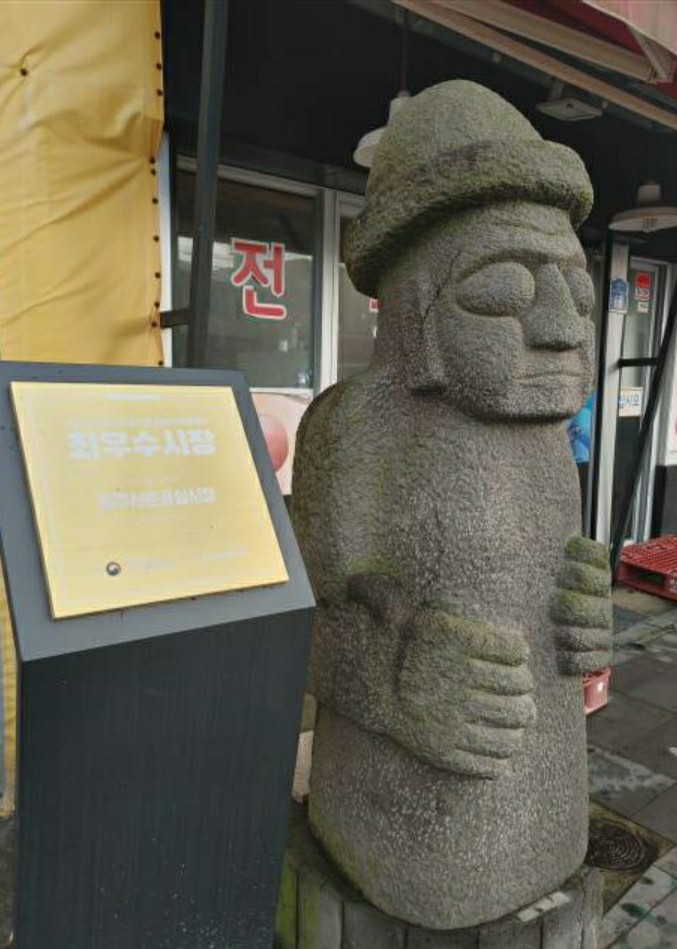
They can be found scattered across the island in different places; forty-eight Harubang statues still remain visible, many of them are located in the Bukchon Park. Among these you can find a special one, not to mention the most popular among the Harubang, because it has a phallic head end.
It is said that if you wish to have a male child, you must gently hit that part several times, while other sayings report that if you wish to have a female child, you must touch the ears of the statues.
Given the good omen, it is one of the objects that is bought most in the souvenir shops on the island.
It is no coincidence that Jeju Island is considered one of the most popular honeymoon destinations
new Korean newlyweds, who thus not only romantically enjoy the beautiful nature and the
wonderful breathtaking scenery of the island, but also the blessing of these benevolent people
Harabeoji smiling and peaceful.
Paola Pelissa
Photo credit Y. Kim